Try "kitchen decor", "appliances", or "renovation tips"

Choosing the Best chair for kitchen use may sound simple until you start comparing sizes, materials and styles. A chair can look lovely online but feel uncomfortable after ten minutes. Another may seem practical but take up far too much room once it arrives.
Kitchen chairs work harder than most furniture. They support quick breakfasts, family dinners, homework sessions, coffee breaks and weekend gatherings. In many UK homes, the kitchen table also doubles as a desk, craft area or place to sort the weekly post.
The ideal chair should therefore balance comfort, durability and appearance. It must fit beneath the table, leave enough walking space and cope with everyday spills. This guide explains how to choose kitchen chairs that suit your room, household and budget.
A good kitchen chair should feel comfortable, fit the table properly and match the way your household lives. Before thinking about colours or trends, consider how often the chair will be used and who will use it.
Ask yourself a few practical questions:
A retired couple who enjoy long breakfasts may value padded seats and supportive backs. A young family may prefer wipe-clean wooden or moulded chairs. Someone living in a city flat might need lightweight chairs that slide completely under the table.
The best choice is not always the most fashionable one. It is the chair that solves the everyday needs of your kitchen.
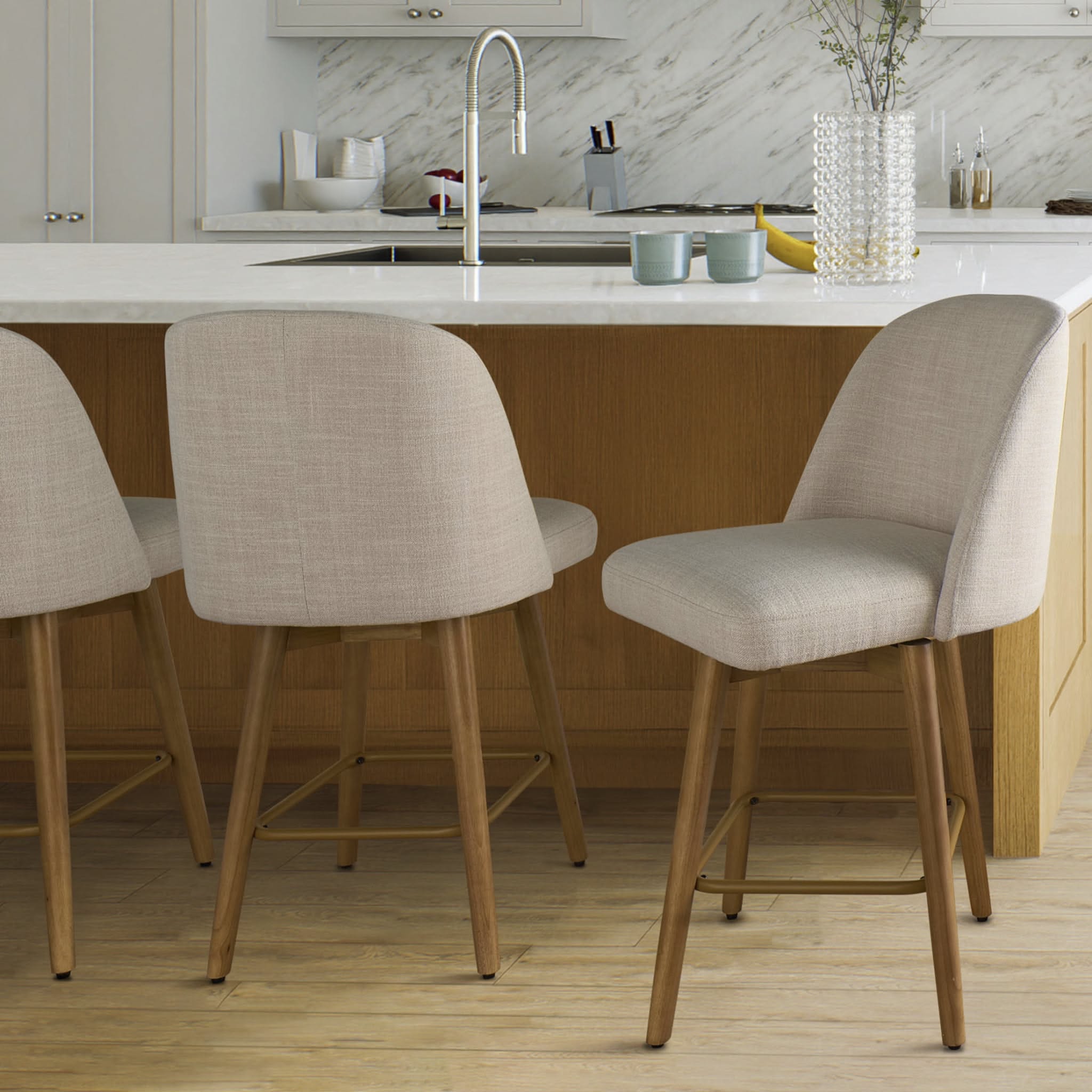
Kitchen seating in 2026 is moving towards warmer, softer and more personal interiors. Cold grey finishes and perfectly matched furniture sets are giving way to natural wood, gentle curves and mixed materials.
Warm neutrals, earthy shades and lived-in finishes are replacing stark white and flat grey across British interiors. Curved furniture, natural textures and deeper tones are also becoming more visible in modern homes.
Group a small vase, salt and pepper, a candle and perhaps the napkins on one tray. When serving dishes arrive, lift everything away in one movement.
This prevents decorative bits spreading across the table and helps a desk become a dining space quickly. It also makes wiping the surface much easier.
Oak, ash, beech and walnut tones remain popular because they add warmth without making a kitchen feel overly decorated. Pale wood suits Scandinavian-style rooms, while darker stains work well with navy, green or cream cabinets.
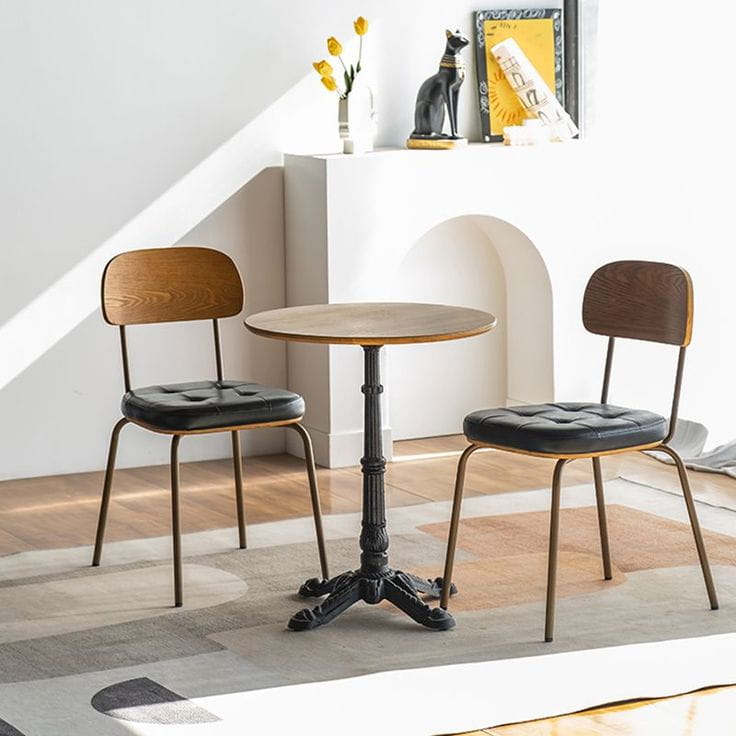
Wooden chairs are also easier to mix with an existing table. The grain and tone do not need to match perfectly. A slight contrast often makes the space feel more natural.
Textured dining chairs remain popular for households wanting a cosy, comfortable look. An olive-green bouclé chair was named the Best Dining Chair in the Ideal Home Awards 2026, showing that tactile fabric and richer colour remain strong choices.
However, bouclé may not suit every kitchen. Its looped surface can collect crumbs and marks more easily than smooth fabric. It works best in adult households or kitchen-diners where chairs sit away from the main cooking area.
Modern kitchen tables no longer need a perfectly matching set of chairs. You might use four wooden chairs with two upholstered end chairs or combine different vintage designs in one colour.
The trick is to repeat something. Keep the seat height, wood tone, shape or colour connected. This creates character without making the room look untidy.
The size and layout of the room should guide your decision. A chair that works in a large detached home may overwhelm a narrow terrace or compact flat.
Choose slim, armless chairs with open backs. Spindle-back, ladder-back and simple moulded designs allow light to pass through, which helps the room feel less crowded.
Avoid chairs with wide arms, deep seats or heavy padded backs. Even when they technically fit around the table, they can make movement difficult.
Folding or stackable chairs are useful when you only need extra seating occasionally. A bench can also save room because it can sit close to the wall and tuck beneath the table when not in use.
IKEA recommends measuring the full dining area and allowing enough room for chairs to be pulled out comfortably. Its general guidance suggests around 90 cm between the table edge and a wall or nearby furniture where space permits.
In an open-plan kitchen, chairs become part of the wider living space. You can therefore choose a stronger colour, upholstered finish or more sculptural shape.
Try connecting the chairs to another feature in the room. Green seats might echo the kitchen cabinets, while black chair legs could match pendant lights or window frames.
Avoid adding too many competing finishes. If the kitchen already includes patterned tiles, veined worktops and bold cabinets, simple chairs may create better balance.
Family chairs need to be stable, easy to clean and difficult to damage. Solid wood, metal and quality moulded plastic are usually sensible choices.
Look for:
Very light colours can show every fingerprint. Mid-tone wood, muted green, navy and patterned fabrics tend to be more forgiving.
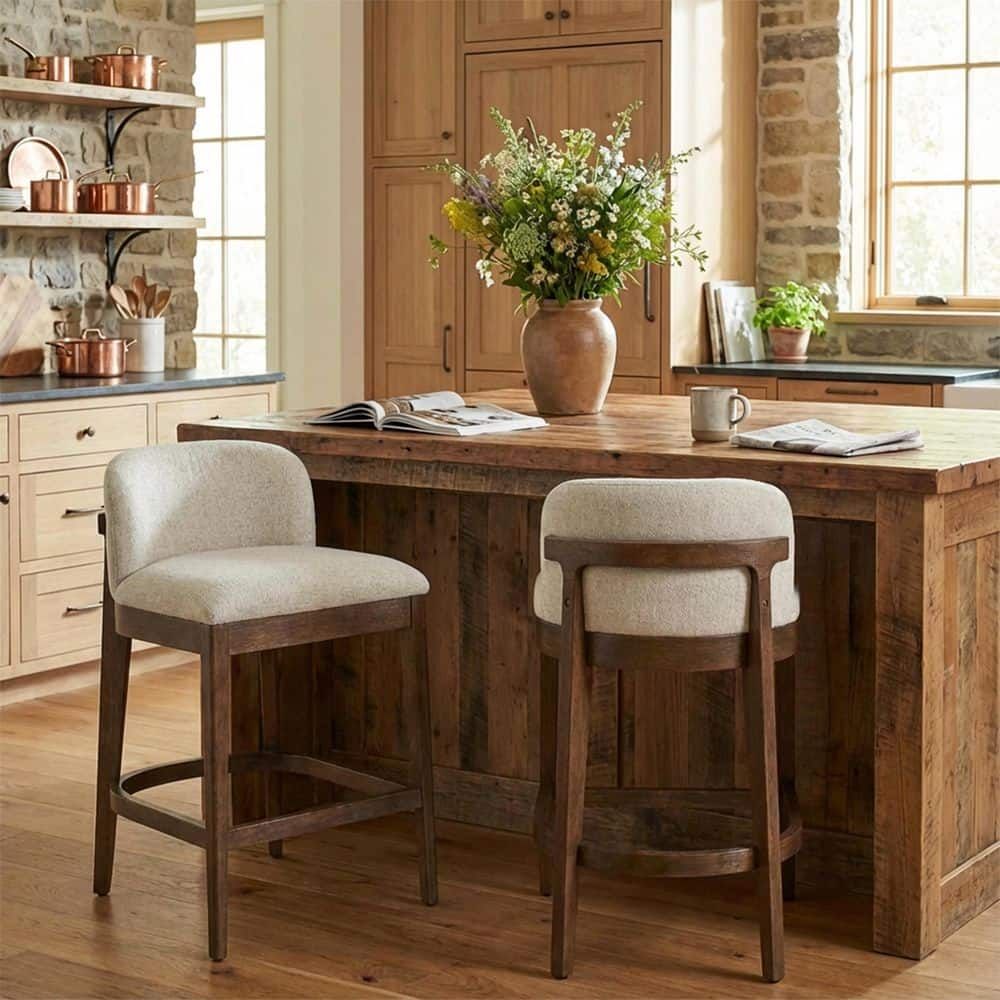
Never judge comfort by appearance alone. A beautiful chair can become frustrating if the seat is too hard, the back sits at the wrong angle or the front edge presses against your legs.
When possible, sit on the chair before buying it. Keep both feet on the floor and sit back naturally. Check whether the backrest supports you without forcing your shoulders forward.
The seat should be deep enough to support your thighs but not so deep that you cannot reach the backrest. A gently shaped seat often feels better than a completely flat wooden panel.
Most dining chairs sold by Dunelm have a seat height of roughly 45–48 cm, designed to work with tables around 75 cm high. The retailer also warns that table frames and lower ledges can stop chairs with arms from sliding underneath.
Measure from the floor to the underside of your table, not just the top. Allow roughly 25–30 cm between the chair seat and the table surface. Remember that a padded seat may sink slightly when someone sits down.
Each material has advantages. Your decision should depend on cleaning, comfort, room size and the amount you want to spend.
Material | Best for | Main consideration |
Solid wood | Busy households and long-term use | Can feel firm without a cushion |
Upholstered fabric | Comfort and open-plan rooms | Needs more careful cleaning |
Metal | Industrial kitchens and compact spaces | May feel cold or hard |
Moulded plastic | Children and easy maintenance | Quality varies between products |
Cane or woven cord | Light, natural interiors | Weave may catch crumbs |
Faux leather | Wipe-clean comfort | Cheap finishes may peel |
Wood is one of the safest long-term choices. It suits traditional cottages, modern new-builds and rented flats. It can also be sanded, painted or fitted with seat pads later.
Check the joints carefully. Screwed, glued or reinforced joints usually feel more stable than chairs held together by very thin fixings.
Upholstered chairs feel comfortable during long dinners and make a kitchen-diner feel more like a living room. Choose stain-resistant fabric or removable covers where possible.
Smooth weaves are generally easier to clean than heavily textured materials. Darker flecked fabrics can hide small marks between deeper cleans.
Moulded plastic chairs are practical for homes with young children. Many designs are lightweight, easy to wipe and available at sensible prices.
Metal-framed chairs can provide strength without visual bulk. Check that the feet have protective caps, particularly if you have wood, laminate or luxury vinyl flooring.
You do not need to buy a complete new set at once. Buying slowly can result in a more personal kitchen and reduce the risk of making an expensive mistake.
Start by checking Facebook Marketplace, local charity furniture shops, car-boot sales and reuse centres. Solid wooden chairs often need little more than cleaning, tightening and a fresh coat of paint.
You can also:
Slow decorating, which involves choosing pieces gradually rather than filling a room immediately, has become a notable interiors approach in 2026. It suits kitchen chairs particularly well because you can test comfort and durability before committing to a full set.
Consider a couple living in a compact Manchester flat. Their round table also serves as a weekday workspace. Slim, armless wooden chairs allow them to move freely and slide the seats beneath the table after dinner.
A family in Leeds with two young children might choose moulded wipe-clean chairs with removable cushions. The chairs handle spills during the week, while the cushions make longer Sunday meals more comfortable.
In a larger Kent kitchen-diner, six identical chairs might feel too formal. Four wooden side chairs with two upholstered end chairs would create a softer, more collected look while offering extra comfort to adults or older relatives.
These simple examples show why the same chair will not work for every kitchen.
One common mistake is buying chairs without measuring their full width. Four chairs may fit along the table, but people could still feel cramped once seated.
Another is forgetting the table legs. Pedestal tables usually provide flexible seating, while tables with wide corner legs can reduce usable space.
Do not assume that all dining chairs are sold assembled. Check the product description and read customer comments about wobbling, loose fittings and difficult assembly.
Finally, avoid choosing delicate fabric simply because it photographs well. Think about tomato sauce, tea, muddy school uniforms and daily cleaning before making the final decision.
The right chair for kitchen use should feel comfortable, fit the available space and cope with normal household life. Begin with measurements, then consider who will use the chairs and how much cleaning they will require.
Current styles favour curved backs, natural wood, textured fabric and a more relaxed mix-and-match look. However, practical details matter more than trends. A sturdy wooden chair, a washable upholstered seat or a compact stackable design may serve your home far better than an eye-catching chair that is awkward to use.
Take your time, test the seat where possible and buy the best construction your budget allows. Well-chosen kitchen chairs can make everyday meals more comfortable and give the whole room a warmer, more finished feel.

Lorem ipsum dolor sit amet, consectetur adipiscing elit. Ut elit tellus, luctus nec ullamcorper mattis, pulvinar dapibus leo. Ut elit tellus, luctus nec ullamcorper mattis, pulvinar dapibus leo