
Try "kitchen decor", "appliances", or "renovation tips"
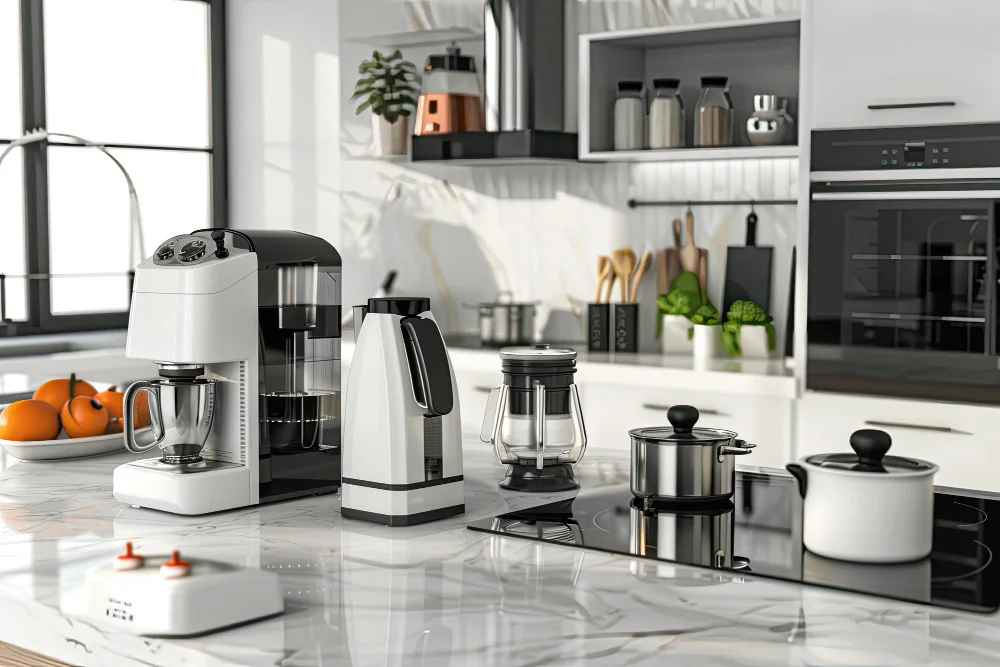
Small kitchen appliances make everyday life easier, but eventually even the most useful kettle, toaster, blender or coffee machine reaches the end of its life. When that happens, putting it in the general household bin may seem like the simplest option. However, electrical appliances should usually be handled differently because they contain materials and components that can potentially be recovered and reused.
For UK households, recycling unwanted electrical equipment can be a straightforward process once you know where to take it. Whether you're replacing an old air fryer, upgrading your coffee machine or clearing out a cupboard full of unused gadgets, there are several options worth considering.
This guide explains how to recycle small kitchen appliances responsibly, how to decide whether an appliance should be repaired or reused and what to do before taking it to a recycling point.

Small kitchen appliances are generally electrical or electronic items used for cooking, preparing food, heating drinks or other everyday kitchen tasks.
These can include:
Some appliances may contain batteries or other components that need separate handling, so check the recycling requirements for the specific item.
Electrical appliances contain valuable materials such as metals, plastics and electronic components. Recycling allows some of these materials to be recovered instead of sending the whole appliance to landfill.
Throwing an unwanted electrical appliance into general rubbish can mean potentially useful materials are lost.
Recycling can help:
Even a small appliance can contribute to a larger waste problem when millions of households dispose of electrical goods incorrectly.

Before recycling an appliance, don't automatically assume it needs to be thrown away.
If it's still working safely, someone else may be able to use it.
Ask yourself:
If the answer is yes, consider donating, selling or giving it away rather than recycling it immediately.
Extending the useful life of an appliance can be preferable to replacing it unnecessarily.
A working kitchen appliance may be useful to another household, community organisation or charity.
If you're donating an appliance:
Don't donate an appliance that you believe is unsafe or has a serious electrical fault.
If your appliance is still in good working order but no longer suits your kitchen, selling or giving it away can be another option.
Online local marketplaces and community groups can be useful for finding someone who needs a second-hand appliance.
When listing an appliance, provide accurate information about:
Being transparent makes the process easier for both sides.
If an appliance is no longer suitable for reuse, look for an appropriate recycling service.
Your local council may provide information about household electrical recycling and local waste facilities.
Recycling facilities don't all accept exactly the same items.
Before taking your appliance somewhere, check:
Checking beforehand can save you an unnecessary trip.
When buying a replacement appliance, check whether the retailer provides a take-back or recycling service for your old one.
A collection service can be particularly useful when replacing an appliance that is awkward to transport.
Depending on the retailer and purchase, they may offer options for taking away old electrical equipment when delivering the replacement.
Always check the terms before placing your order because services and eligibility can vary.
Small electrical appliances should not simply be treated like ordinary household rubbish.
Many contain electrical components and materials that need appropriate processing.
Recycling arrangements can vary between UK local authorities, so don't assume that the same collection service is available everywhere.
Your council's official waste and recycling information is the best place to check what is accepted locally.
You may notice a crossed-out wheelie bin symbol on electrical and electronic products.
This symbol indicates that the item should not be disposed of with ordinary household waste.
The symbol is a useful reminder that the product belongs within an appropriate electrical and electronic waste stream.
If you're unsure what to do with a particular appliance, check its documentation or contact your local recycling service.

Appliances such as blenders, air fryers and food processors can contain food residue even when they appear clean from the outside.
Before recycling or donating an appliance:
This makes handling more pleasant and prepares the appliance for its next stage.
Some small kitchen gadgets may contain rechargeable batteries.
These need particular attention because batteries can present risks if they're damaged or disposed of incorrectly.
If the battery is removable, check the manufacturer's instructions and your local recycling guidance for the correct disposal route.
Don't put loose rechargeable batteries into ordinary household waste.
If you're unsure whether a battery can be removed safely, don't force it. Follow the manufacturer's instructions or ask an appropriate recycling service for advice.
In most cases, you shouldn't cut cables off an appliance simply because you're recycling it.
Leave the appliance intact unless the recycling provider specifically instructs you otherwise.
If the appliance has a detachable power cable or accessories, check the recycling service's requirements before separating anything.
For reusable appliances, keeping the original components together can make them more useful to the next owner.
A broken appliance isn't necessarily suitable for donation, but that doesn't mean it belongs in general rubbish.
If the fault is minor and the appliance is otherwise in good condition, repair could extend its useful life.
For example, a small appliance with a replaceable component may be worth repairing rather than immediately replacing.
However, don't attempt electrical repairs unless you have the appropriate knowledge and qualifications. Safety should always come before saving money.
If an appliance is damaged beyond practical repair, recycling is usually the sensible next step.
Take it to an appropriate electrical recycling facility or arrange a suitable collection service.
Depending on local arrangements, recycling schemes may accept items such as:
Always confirm acceptance with the specific recycling provider first.
If a recycling point is full or doesn't accept your appliance, don't simply leave the item beside the container.
This can create a safety and environmental problem and may be treated as illegal dumping.
If your preferred facility can't accept the appliance, check for another authorised recycling location or collection service.
A few extra minutes of research is better than leaving electrical waste somewhere it doesn't belong.
A good time to think about recycling is when you're buying a replacement.
Instead of allowing the old appliance to sit in a cupboard indefinitely, decide what will happen to it before bringing the new one home.
When buying a new appliance:
Step 1: Decide whether the old one can be reused.
Step 2: If not, find an appropriate recycling option.
Step 3: Clean and prepare the old appliance.
Step 4: Arrange collection or transport.
Step 5: Keep the replacement packaging where useful until you're certain everything works correctly.
This prevents old appliances from becoming unnecessary clutter.

Recycling is important, but reducing unnecessary purchases can have an even greater impact.
Before buying another kitchen gadget, consider:
Choosing durable, repairable products can reduce the number of appliances you eventually need to dispose of.
Good storage can help protect appliances from unnecessary damage.
Keep electrical equipment dry and protect it from excessive heat, moisture and impacts.
If appliances are constantly being squeezed into an overcrowded cupboard, cables and components can become damaged.
Use suitable storage and keep frequently used appliances somewhere accessible.
Taking care of an appliance can help it remain useful for longer.
Once electrical equipment enters an appropriate recycling system, it can be processed so that useful materials and components may be recovered.
Depending on the appliance, this can include metals, plastics and other materials.
The exact recycling process varies according to the product and facility, but the overall aim is to keep valuable resources in circulation and prevent unsuitable waste from being handled through ordinary household rubbish systems.
Recycling small kitchen appliances is a simple way for UK households to deal with unwanted electrical equipment more responsibly. Before throwing anything away, consider whether the appliance can be repaired, donated, sold or given to someone else.
If it has reached the end of its useful life, check your local council's recycling guidance or an appropriate electrical recycling service. Retailer take-back schemes can also be convenient when you're replacing an appliance.
Remember to clean appliances, keep components together and pay particular attention to products containing batteries. Never place electrical equipment or loose batteries into ordinary household waste unless your local authority specifically says that it is permitted.
A kettle, toaster or blender may be small, but making responsible choices with everyday items adds up. By reusing what can still be useful and recycling what genuinely needs replacing, you can reduce household waste while making better use of the materials already in circulation.

Make more of your kitchen with practical tips on furniture, decor, appliances, cleaning and renovation. Discover useful guides and food ideas to create a space that works beautifully every day.