Try "kitchen decor", "appliances", or "renovation tips"
A kitchen table has to do more than look good. It might be where you eat breakfast, help the children with homework, prepare vegetables or chat over a cup of tea. Because it often sits at the centre of the room, its shape, finish and colour can influence the whole kitchen.
The easiest way to choose a table that suits your decor is to work with what is already there. Look at your cabinets, worktops, flooring and lighting before deciding whether you need a strong contrast or a more coordinated look. You do not have to buy a matching furniture set; a little contrast can make a kitchen feel more considered and personal.
This guide explains how to match a kitchen table with your decor while keeping the room practical for everyday life in a UK home.
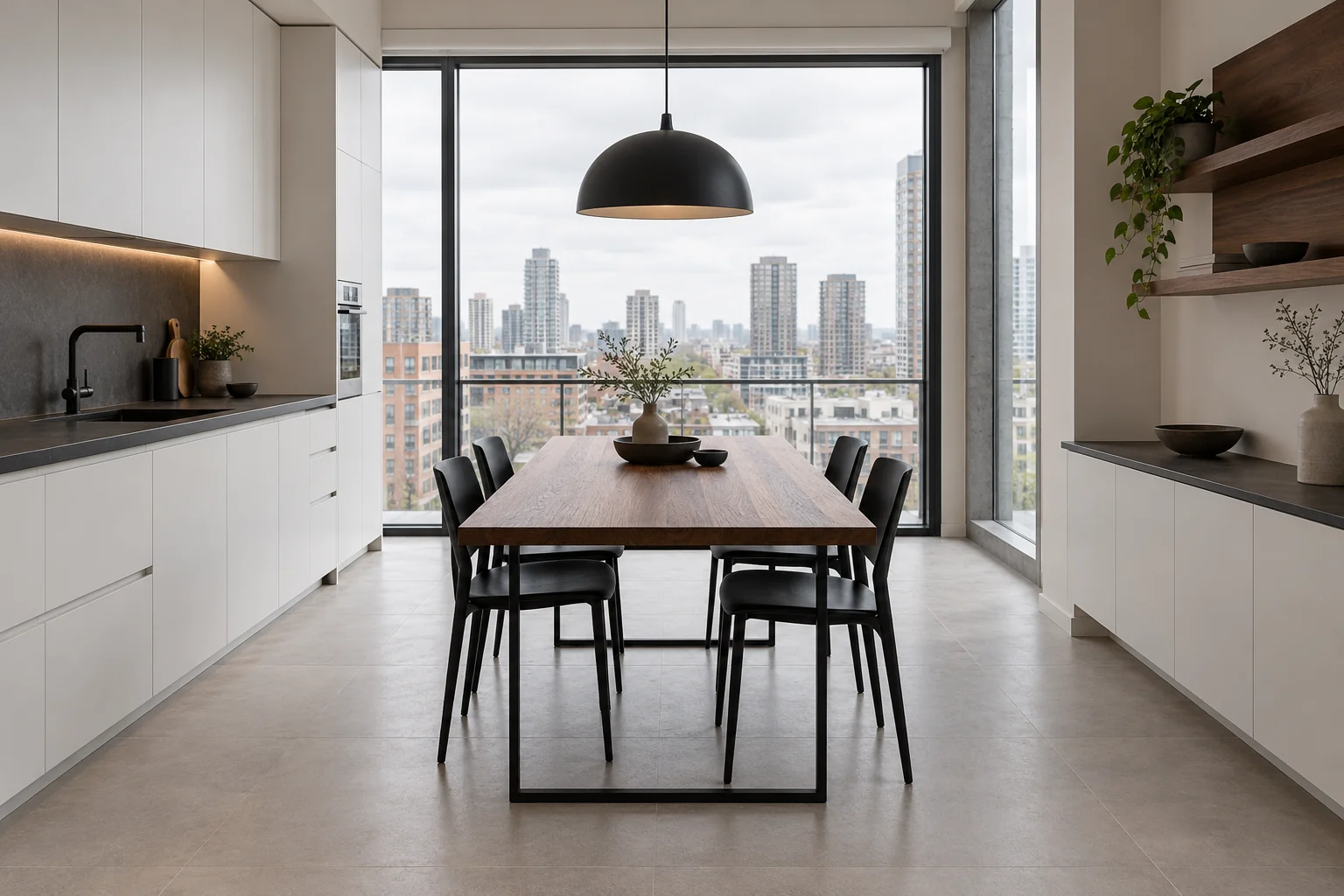
Modern kitchens often feature flat-fronted cabinets, simple handles and clean lines. A table with a straightforward shape usually works well. Consider a slim rectangular table, a round pedestal design or a simple timber top with metal legs.
If the kitchen is mostly white, grey or black, a natural oak or walnut-effect table can introduce warmth. Alternatively, a black or dark-stained table can create a deliberate contrast, provided the room has enough light and visual space.
Avoid adding too many competing finishes. One or two contrasting materials are usually enough to give a modern room character.
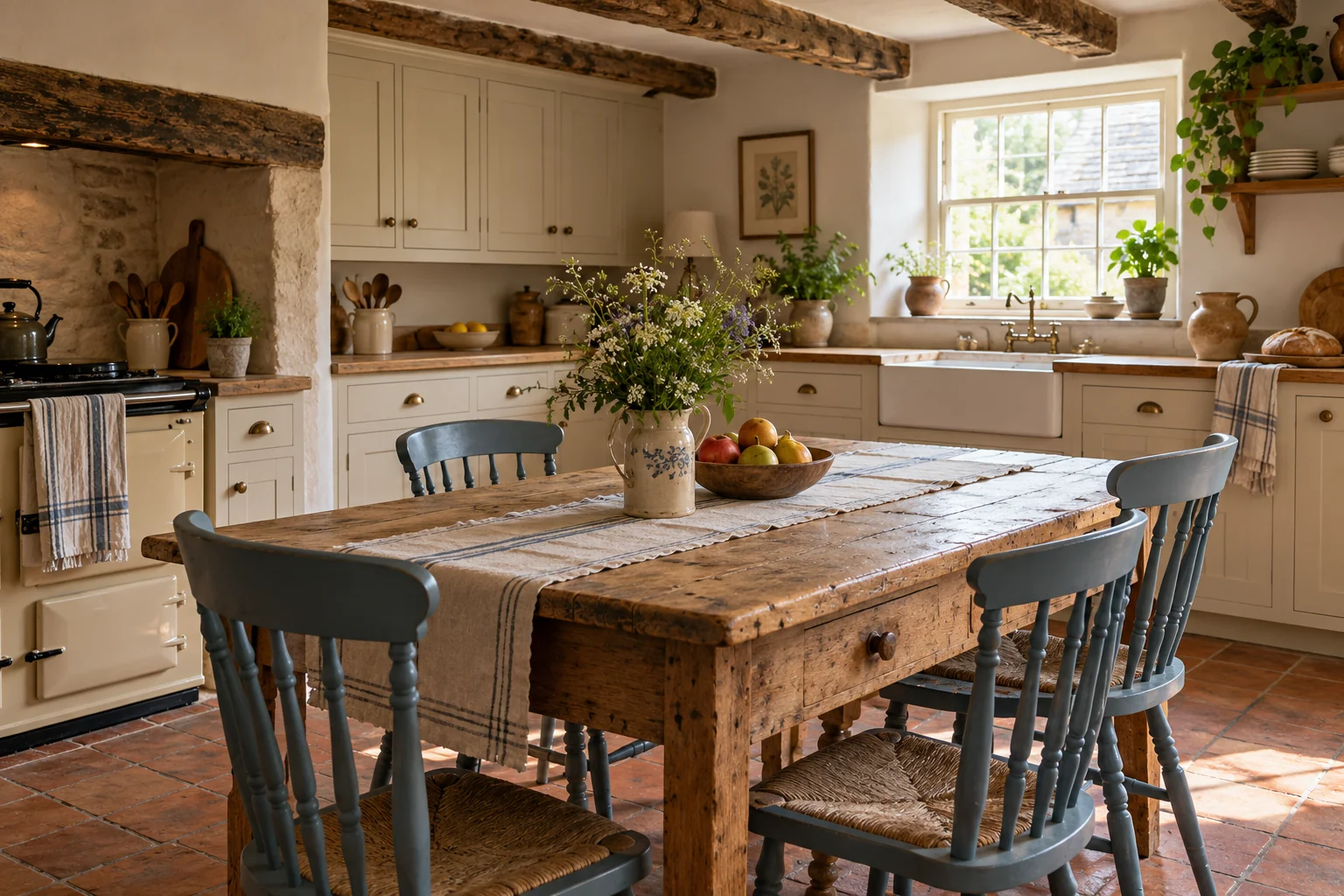
Shaker cabinets, framed doors, ceramic sinks and traditional taps pair naturally with timber tables and painted furniture. A farmhouse-style table can create a welcoming, lived-in feel, while a painted table can pick up a colour already used on the cabinets or walls.
In a small cottage kitchen, a chunky table may look attractive but can take up valuable floor space. Choose proportions that leave enough room to pull out chairs and walk past comfortably.
Metal legs, darker timber and simple silhouettes can complement exposed brick, concrete-effect surfaces and stainless-steel details. If the kitchen already contains several hard surfaces, balance them with a timber top, upholstered seat pads or woven accessories.
The goal is not to reproduce a café interior exactly. Add only the industrial details that suit your home and the way you use the room.
Identify two or three colours already present in the room. These might be the cabinet colour, the worktop and the floor. Your table can repeat one of these shades or introduce a complementary material.
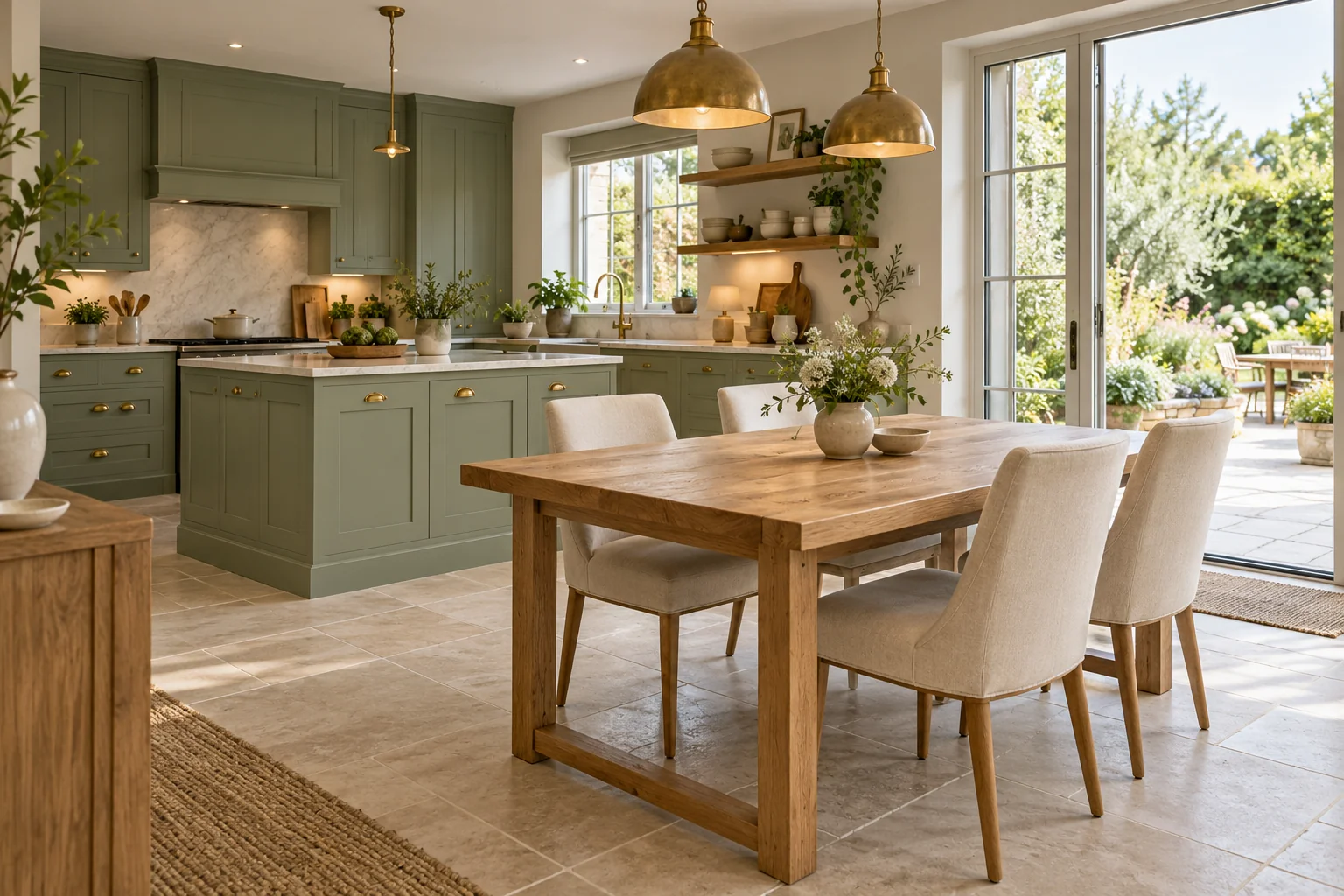
For example, white cabinets, pale walls and oak-effect flooring can work well with a natural wood table. A navy or sage-green kitchen might suit a light oak top that softens the darker cabinetry. In a cream kitchen, a mid-tone wood can add definition without creating a sharp contrast.
A table does not have to match the cabinets exactly. In fact, trying to match wood finishes from different suppliers can result in near-matches that look accidental.
Instead, choose either a clear contrast or a close, intentional relationship. Pale cabinets with a darker table create contrast; pale cabinets with a similar light wood table create a calm, coordinated look. If the tones are different, repeat the table's finish elsewhere—for example, in shelves, picture frames or a chopping board—to make the choice feel deliberate.
The floor is a large visual surface, so its colour matters. If the floor and table are both dark, the room may feel heavy, especially if natural light is limited. A lighter table or lighter chair seats can break up the dark area.
With patterned tiles or a busy floor, keep the table relatively simple. With plain flooring, you have more freedom to choose a distinctive table shape or finish.
Wood adds warmth and works with many kitchen styles. Different woods and stains vary in tone, so view a sample in your own lighting before buying. Solid wood may need occasional care and can be affected by heat, moisture and spills, depending on its finish.
Use coasters and placemats where appropriate, wipe up spills promptly and follow the manufacturer's care guidance.
Veneered and wood-effect tables can provide the appearance of timber at different price points. Check the edges and surface construction, especially if the table will be used heavily. Protect it from standing water and hot pans unless the maker confirms the surface is heat-resistant.
A glass top can make a compact room feel visually lighter because more of the floor remains visible. However, fingerprints and smears may be more noticeable, so consider whether you are happy to clean it frequently. Check the table's stability and the manufacturer's safety guidance, particularly in homes with young children.
Metal can suit contemporary kitchens and is often easy to wipe down, but it may feel visually cold when used everywhere. Pair it with wood, textured fabric or warm lighting to soften the result.
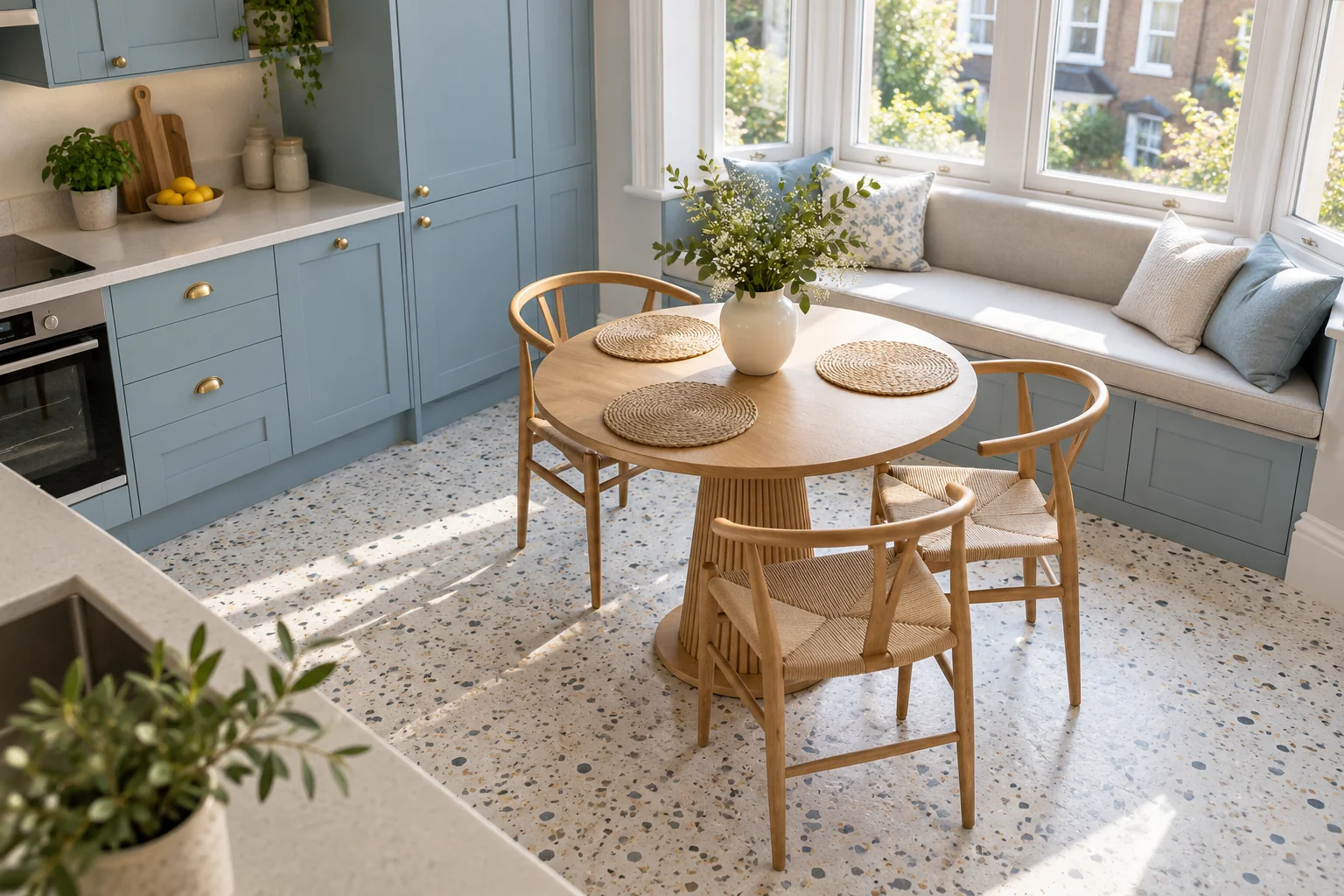
The table should fit the room, not just the style. Measure the available space and mark the proposed footprint with masking tape before you buy. Include the space needed to pull chairs out and walk around them.
A rectangular table often works well in a narrow kitchen because it can sit along a wall or parallel to a run of cabinets. A round table can make movement around it easier in some layouts and removes sharp corners, but check that its diameter still leaves enough room for chairs.
For a compact kitchen, consider a drop-leaf table, a wall-mounted folding table or a small extendable design. These options provide flexibility without permanently taking over the room.
Matching table and chairs can create a coordinated look, but mixing styles can feel more relaxed. Try keeping one feature consistent—such as colour, seat height or material—while varying another.
A timber table can work with painted chairs, metal-framed seats or simple upholstered chairs. In a family kitchen, choose a fabric that is easy to clean or removable seat covers that can be washed according to their care label.
Always check chair height against the table and make sure the chairs fit beneath it when not in use.
A pendant light above the table can help define the dining area, especially in an open-plan kitchen. Make sure the fitting is positioned safely and does not obstruct sightlines or movement. If you rent or cannot change the wiring, a table lamp on a nearby sideboard or a plug-in lighting option may be more practical.
Keep table accessories useful rather than cluttered. A small vase, fruit bowl, placemats or a washable runner can introduce colour and texture. Leave enough clear space for serving dishes and everyday tasks.
Repeat one or two materials elsewhere in the room. A timber table might connect with a wooden shelf; black table legs might echo cabinet handles or light fittings.
To match a kitchen table with your decor, start with the cabinets, flooring and worktops, then choose a table that complements the existing palette. Think about material, shape and everyday maintenance before committing to a style.
The best table is one that feels at home in the room and supports how your household uses it. A thoughtful contrast, comfortable chairs and a little repeated detail can bring the whole kitchen together without making it look overly matched.

Make more of your kitchen with practical tips on furniture, decor, appliances, cleaning and renovation. Discover useful guides and food ideas to create a space that works beautifully every day.