
Try "kitchen decor", "appliances", or "renovation tips"
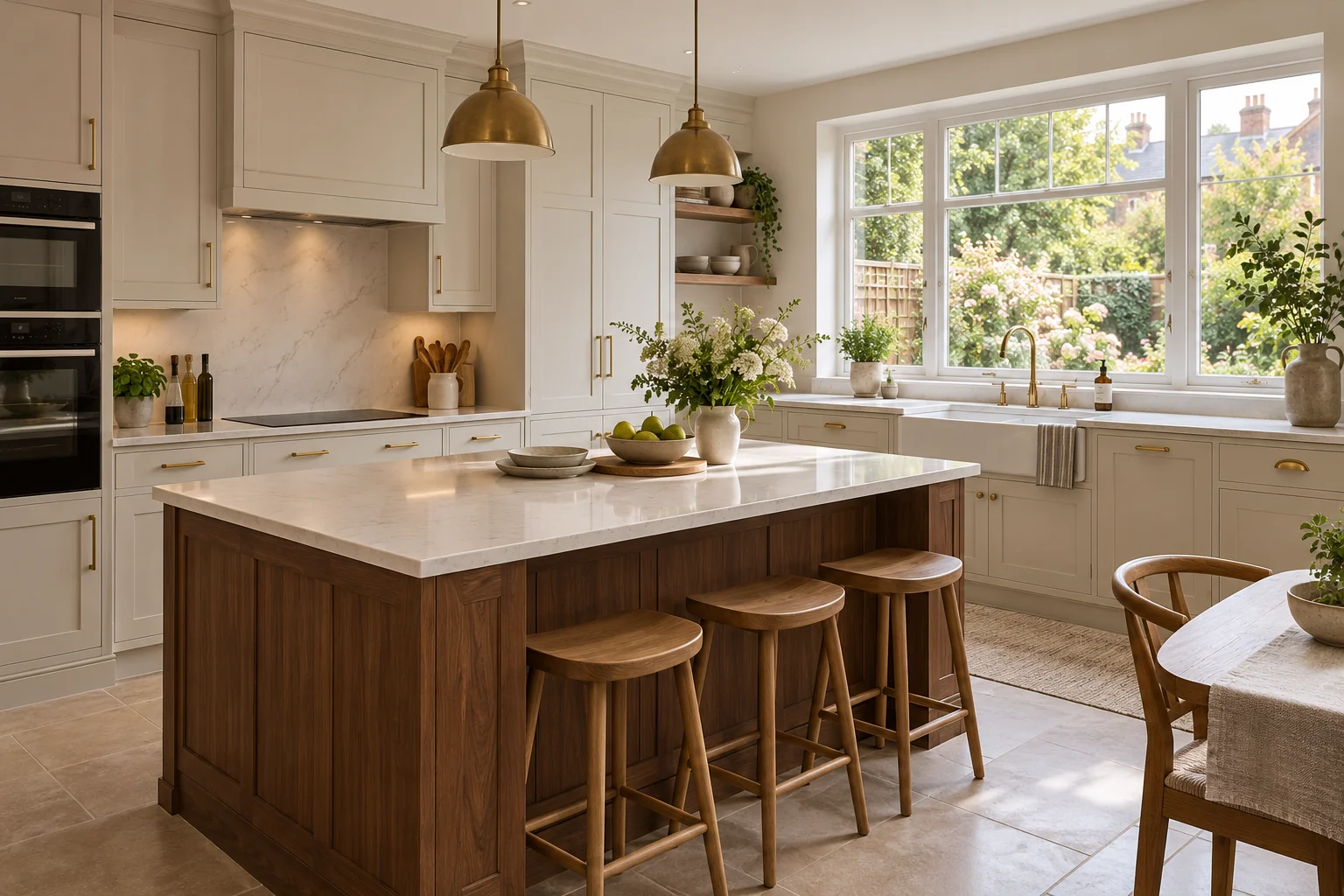
A kitchen renovation can be one of the most satisfying improvements you make to your home, but it is also one of the easiest projects to underestimate. The price on a showroom display may cover the cabinets and worktops, while the finished room also needs fitting, plumbing, electrics, flooring, lighting and waste removal.
So, how much does a kitchen renovation cost in the UK? The honest answer is that it depends on the size of the room, the standard of materials and how much you plan to change. A straightforward refresh can cost far less than a renovation that moves the sink, replaces every appliance or removes a wall.
This guide explains the main costs, where your money is likely to go and how to build a budget that leaves room for the unexpected.
For a broad starting point, Checkatrade’s 2026 guide puts a budget kitchen renovation at around £6,200–£16,800, with an average of about £11,500. It places bespoke renovations at approximately £15,000–£50,000, averaging around £35,000. These are guide prices rather than fixed quotes, and the scope of work can make a substantial difference.
Which? also publishes kitchen cost estimates based on research with the Building Cost Information Service and its members. When comparing figures, check what is included: some estimates cover supply and installation, while others focus on units or fitting alone.

If your cupboard carcasses are sound and the layout works, you may not need a completely new kitchen. Painting suitable doors, replacing handles, updating the tap, improving lighting or fitting a new splashback can make the room feel fresher without paying for a full refit.
This route is often best when the main problem is dated decoration rather than damaged units or poor layout. Costs vary with the condition of the existing surfaces and whether you do the work yourself.
A budget refit usually means replacing most or all of the kitchen units and finishes while keeping the layout broadly the same. Standard-sized cabinets, laminate worktops and retaining working appliances can help keep the total manageable.
The more services you move, the more likely your budget is to rise. Keeping the sink, hob and major appliances in roughly their existing positions can reduce plumbing and electrical changes.
A higher-specification renovation may include made-to-measure cabinets, stone worktops, integrated appliances, upgraded lighting and more involved installation work. Bespoke cabinetry can make awkward spaces more usable, but it generally costs more than standard modular units.
If you are also opening up the room, moving a doorway or creating a kitchen-diner, allow for structural work and the professional advice that may be needed.
Cabinets are often a major part of the budget. Prices vary according to material, construction, finish, internal fittings and whether the units are standard sizes or made to measure.
Before replacing everything, check whether existing cabinet carcasses are straight, dry and structurally sound. New doors and drawer fronts may be enough if the boxes are in good condition and the new sizes will fit.

Laminate is usually one of the more budget-friendly worktop choices and comes in a wide range of colours and finishes. Solid wood, quartz and natural stone can cost more, and some require more maintenance or specialist fitting.
Remember to budget for cut-outs, joints, upstands and the area behind the hob and sink. A cheaper material may still need careful installation to achieve a neat, durable finish.

Kitchen fitters may quote a fixed project price or charge by the day. Ask for a written breakdown that explains what the labour includes, who is coordinating other trades and how additional work will be priced.
A low quote is not necessarily the best value if it leaves out removing the old kitchen, making good the walls, fitting appliances or reconnecting services.
Moving a sink or dishwasher can mean changing pipework and waste connections. Adding sockets, new circuits or different lighting may require electrical work. Gas appliances must be installed or altered by an appropriately registered Gas Safe engineer.
Do not treat these jobs as optional extras to be sorted out at the last minute. Discuss them during the survey so the quote reflects the actual plan.
New units can expose damaged plaster, uneven floors or old flooring that needs removing. You may also need tiles, paint, sealant, a skip or another approved waste-disposal option.
Ask whether the quote includes taking away the old cabinets and packaging. If it does not, price this separately before work begins.
Start with a list of what must change and what can stay. Separate essential repairs from upgrades you would like but could postpone. Then collect quotes based on the same specification so you can compare them fairly.
Include the cost of appliances, delivery, fitting, flooring, lighting, plumbing, electrical work and disposal—not just the cabinets. Add a contingency of around 10–15% as a practical starting point; older properties or projects involving structural changes may need more.
Imagine a homeowner in a two-bedroom terrace. The cabinets are worn but the layout works, the appliances still function and the floor is in reasonable condition. Replacing the doors, handles and splashback may be more sensible than buying a completely new kitchen.
A different household may have water-damaged units, unsafe wiring or a layout that wastes valuable space. In that case, a full refit may be the more durable solution. These examples show why a budget should follow the condition and needs of the room, rather than a trend.
Do not cut costs by skipping essential electrical, gas or structural checks. Poor installation can become more expensive to correct later.
A like-for-like kitchen refit usually does not need planning permission. However, building regulations may apply to aspects such as electrical work, drainage, ventilation, structural changes or creating a kitchen in a room that was not previously used for that purpose. Listed buildings and some other properties have additional requirements.
Check with your local authority or a qualified professional if the scope is unclear. Keep relevant certificates, guarantees and product details after the work is complete.
The cost of a kitchen renovation is shaped less by a single average price than by the decisions you make along the way. A modest refresh may be enough when the layout and cabinets are still in good condition, while a full refit can be worthwhile when the room no longer functions properly.
Set your priorities first, compare like-for-like quotes and leave room for surprises. A well-planned kitchen should suit the way you live every day—not just look good in a showroom.

Make more of your kitchen with practical tips on furniture, decor, appliances, cleaning and renovation. Discover useful guides and food ideas to create a space that works beautifully every day.