Try "kitchen decor", "appliances", or "renovation tips"
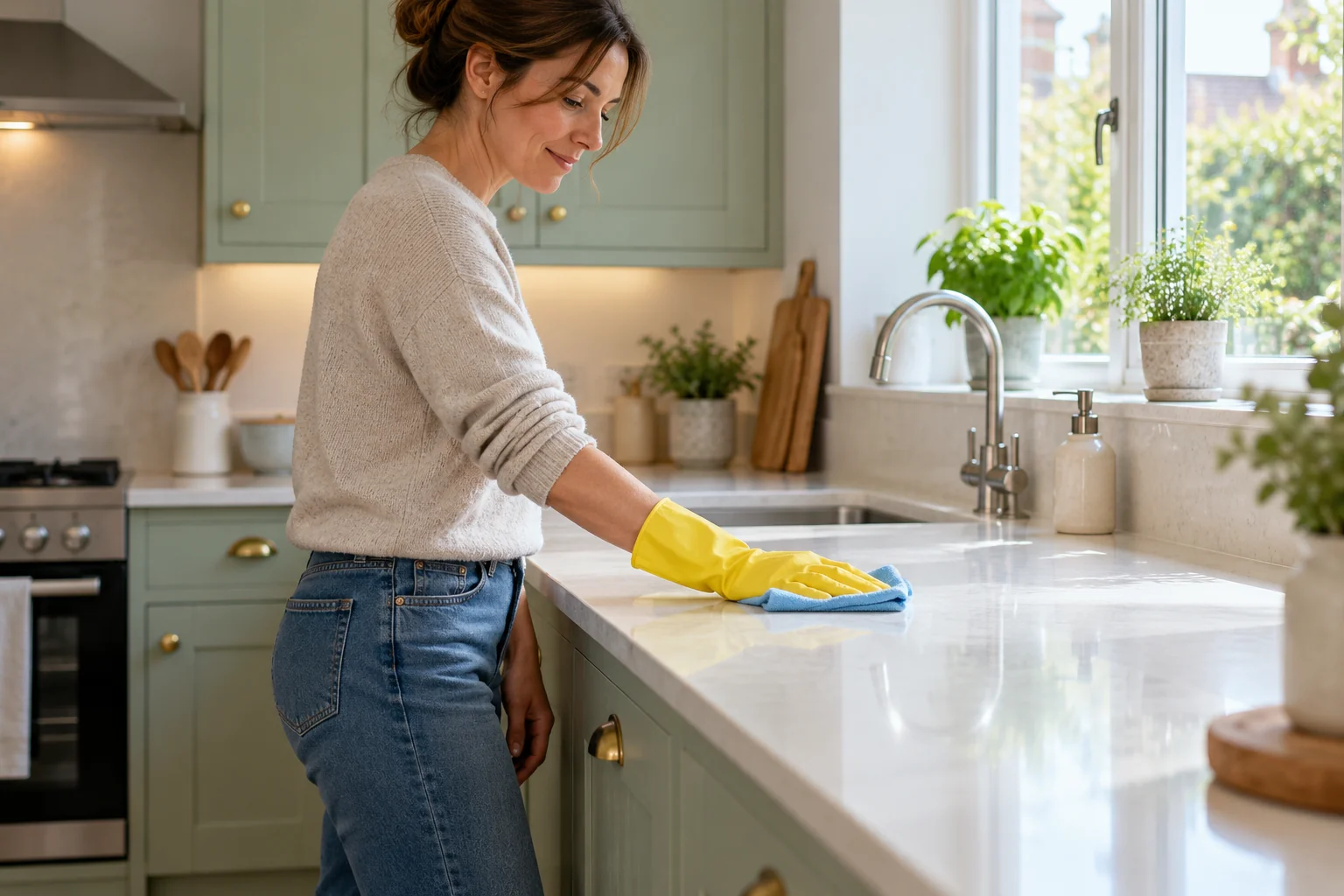
The kitchen is one of the busiest rooms in most homes. It is where meals are prepared, packed lunches are made, cups of tea appear throughout the day and shopping bags are unpacked. With so much happening in one place, crumbs, grease, spills and food residue can build up surprisingly quickly.
Cleaning the kitchen is not just about keeping the room looking presentable. It helps reduce the risk of food contamination, discourages pests, protects surfaces and makes everyday cooking more pleasant. A simple routine is usually more effective than waiting until the whole room needs a major clean.
This guide explains why kitchen cleaning matters, which areas deserve the most attention and how UK households can build manageable habits without spending hours scrubbing.
Raw meat, poultry, seafood, unwashed vegetables and dirty packaging can carry harmful microorganisms. If these transfer to ready-to-eat food, they may cause food poisoning. Hands, chopping boards, knives, taps and worktops can all act as routes for cross-contamination.
Cleaning removes food residue and dirt from surfaces. Where there is a food-safety risk, cleaning may need to be followed by sanitising with a suitable product, used according to its label. These are related but different steps: cleaning removes visible dirt and grease, while sanitising reduces microorganisms to a safer level.
For example, after preparing raw chicken, wash your hands, clean the chopping board and utensils thoroughly, and keep them separate from items used for salad or cooked food. Do not simply wipe the board with a tea towel and use it again.
The UK Food Standards Agency advises households to keep clean, separate raw and ready-to-eat foods, cook food thoroughly and chill food appropriately. These habits work together; a clean kitchen is one important part of safer food preparation.
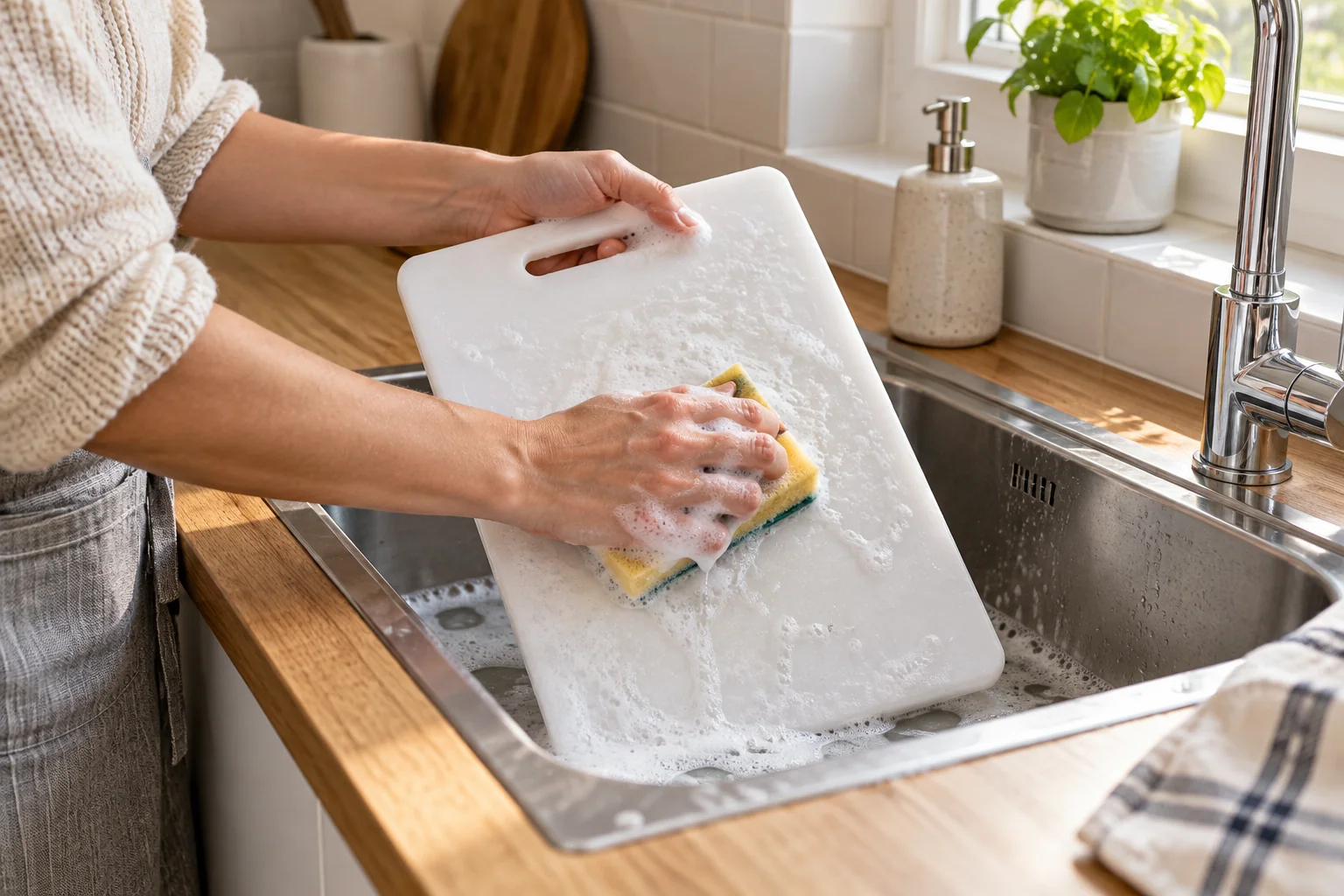
Cross-contamination happens when germs or allergens are transferred from one item or surface to another. It can happen through hands, cloths, utensils, chopping boards or splashes from raw food.
A kitchen cloth used to wipe a raw-meat spill should not then be used to clean a table where bread is being prepared. Wash reusable cloths regularly and allow them to dry between uses. Replace cloths that smell unpleasant or remain visibly dirty.
If someone in the household has a food allergy, clean preparation surfaces and equipment carefully before preparing their food. A quick wipe may not remove all traces of an allergen, so follow reliable allergy guidance and take extra care with shared utensils and crumbs.
Food crumbs, open packets and overflowing bins can attract ants, flies, mice and other pests. Grease and food debris under appliances can provide additional sources of food.
Wipe up spills promptly, store dry goods in sealed containers where practical, empty bins regularly and clean around the cooker and fridge. Check corners and the spaces beside appliances, where crumbs can collect unnoticed.
Good cleaning cannot guarantee that pests will never appear, but it removes many of the conditions that make a kitchen attractive to them.
Grease can become harder to remove when it is repeatedly heated. Limescale may build up around taps, and food spills can damage some finishes if left for too long. Regular, gentle cleaning helps prevent dirt from becoming stubborn and makes it easier to spot leaks or wear.
Always use products that are suitable for the material. Natural stone, timber, laminate, stainless steel and painted cabinet doors may need different care. Abrasive pads and harsh chemicals can scratch or dull surfaces, so check manufacturer instructions first.
A clear, clean worktop gives you space to chop vegetables, prepare ingredients and plate meals. It also reduces the time spent moving clutter before you can start cooking.
A kitchen does not need to look perfect all day. The practical aim is to keep food-preparation areas clean, put away items that are no longer needed and deal with spills before they spread.
Clean worktops before and after food preparation, especially when handling raw ingredients. Use separate chopping boards for raw meat and ready-to-eat foods, or clean them thoroughly between tasks according to food-safety guidance.
Pay attention to the edges and joins where crumbs and moisture can collect. Dry surfaces after cleaning where appropriate.
The sink often receives dirty dishes, food scraps and hands after handling ingredients. Remove food debris from the plughole, wash the sink with a suitable cleaner and wipe taps and handles regularly.
If you have a separate food-preparation sink, keep it clean and use it as intended. Avoid leaving dirty cloths or sponges sitting in a pool of water.
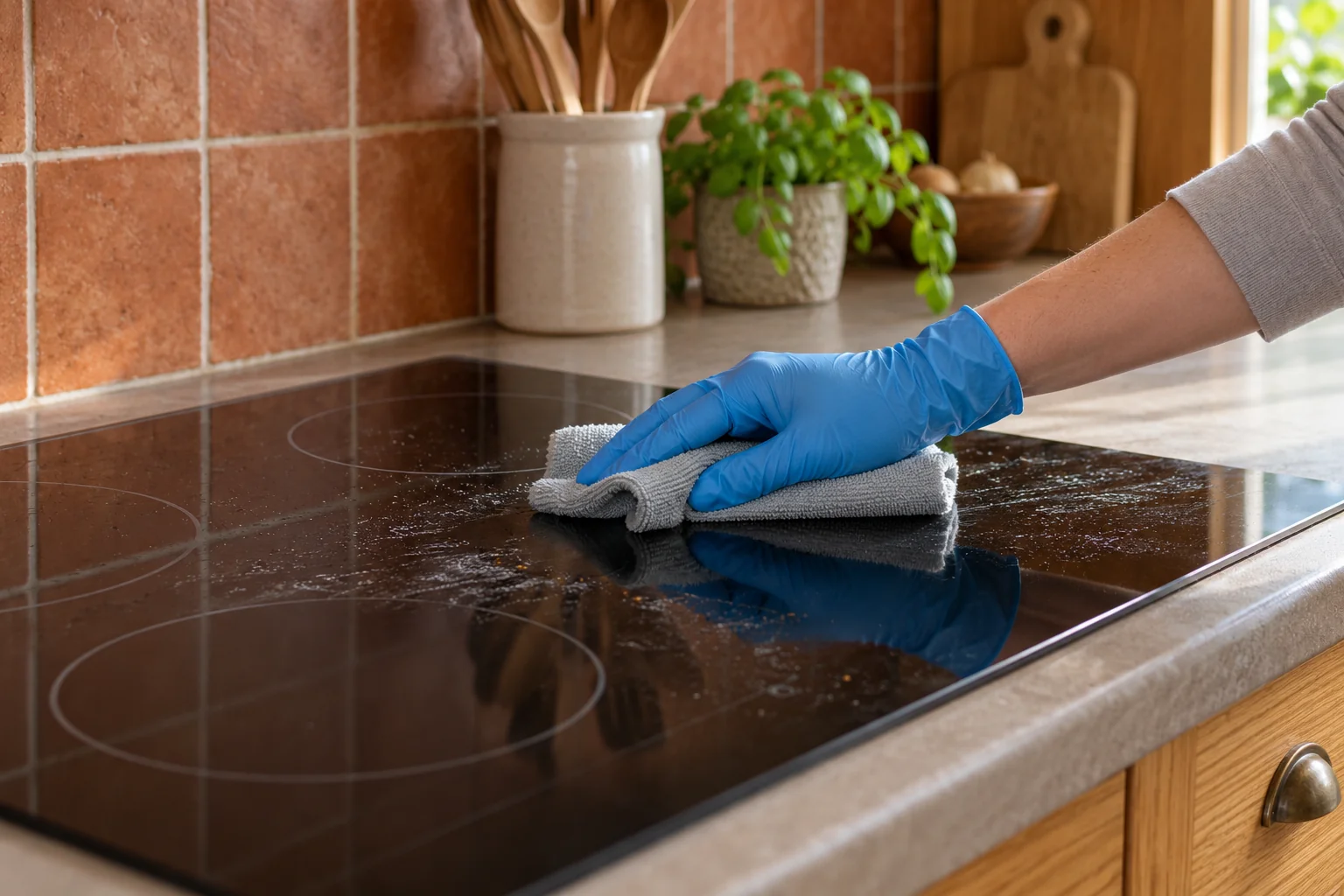
Clean fresh splashes once the hob is cool and safe to touch. Grease around the cooker and extractor can accumulate gradually, so follow the appliance manufacturer's instructions for cleaning filters and surfaces.
Never spray liquid directly into electrical controls, burners or vents. Switch off appliances and let hot surfaces cool before cleaning.
Handles are touched repeatedly throughout the day. Wipe them regularly, especially after handling raw food or rubbish. Check the fridge for spills and expired food, and clean shelves using a product suitable for food-storage areas.
Sweep or vacuum crumbs and mop as needed, particularly beneath the dining area and around the bin. Use bin liners where suitable, clean the bin itself when it becomes dirty and wash your hands after handling waste.
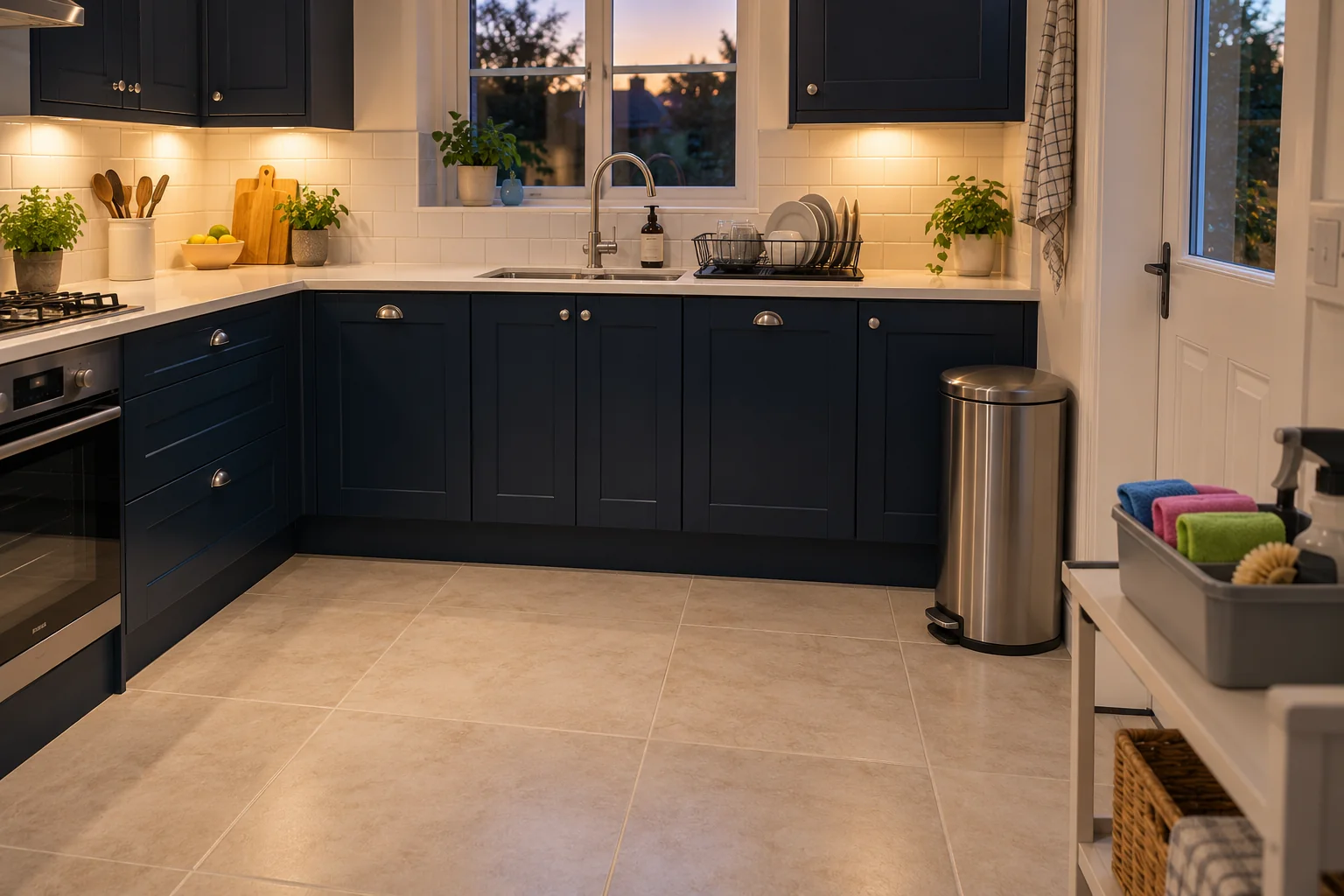
A routine is easier to maintain when tasks are divided into short, regular jobs.
The exact frequency depends on how often you cook and the size of your household. A family preparing several meals each day may need to clean more often than someone who cooks occasionally.
Cleaning removes visible dirt, grease and food residue. Disinfecting or sanitising uses a product designed to reduce microorganisms, but it should not replace ordinary cleaning.
For everyday crumbs or light marks, a suitable detergent and warm water may be enough. After raw-meat spills or where there is a specific contamination concern, follow food-safety guidance and the product label for the appropriate cleaning and sanitising process.
Never mix cleaning products, particularly bleach with acidic cleaners or ammonia-based products, because dangerous gases can be released. Keep chemicals away from children and food, ventilate the room as directed and follow the stated contact time.
Using one cloth for everything: This can spread dirt and germs. Keep separate cloths for different tasks and wash them frequently.
Cleaning around clutter: Move small appliances and containers occasionally so crumbs and grease do not build up underneath.
Using too much product: More cleaner does not necessarily mean a cleaner surface. Follow dilution and rinsing instructions.
Ignoring the manufacturer's guidance: A product suitable for one worktop may damage another.
Leaving wet cloths in a heap: Damp cloths can develop unpleasant odours. Wash and dry them properly.
Kitchen cleaning is important because it supports safer food preparation, reduces pests, protects surfaces and makes the room easier to use. The most effective approach is not an occasional marathon clean; it is a few sensible habits repeated consistently.
Focus on worktops, chopping boards, sinks, handles and cooking areas, and use the right products for each material. With a manageable daily routine and a more thorough weekly clean, you can keep your kitchen hygienic without letting housework take over your day.

Make more of your kitchen with practical tips on furniture, decor, appliances, cleaning and renovation. Discover useful guides and food ideas to create a space that works beautifully every day.