Try "kitchen decor", "appliances", or "renovation tips"
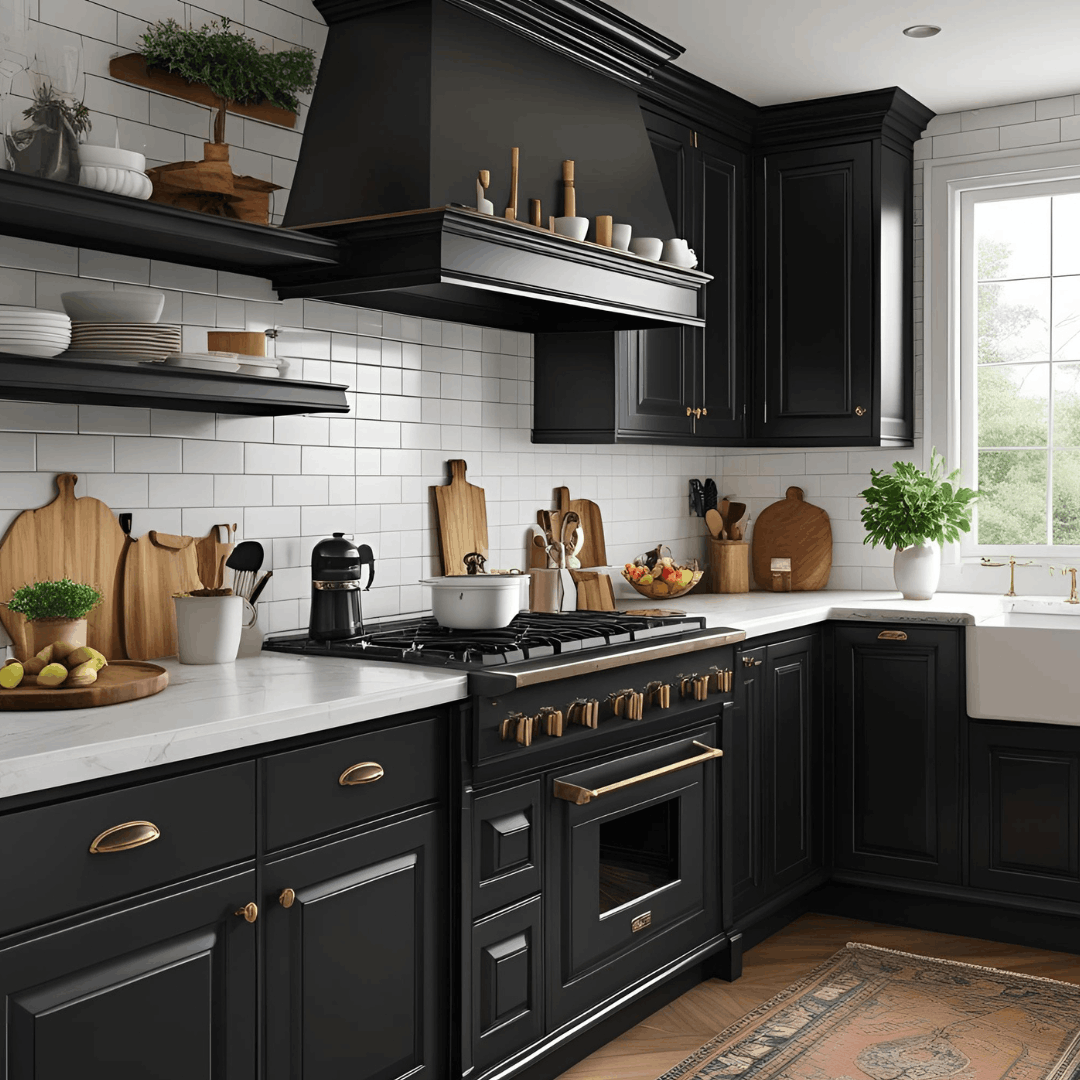
Walk into any newly renovated kitchen these days, and there’s a good chance you’ll spot black cabinets somewhere in the design. A few years ago, many people would have dismissed the idea as too dark or too daring. Today, that’s no longer the case. Across the UK, homeowners are discovering that black kitchen cabinets can feel just as warm and welcoming as traditional white ones, provided they’re used thoughtfully.
The appeal isn’t simply about following the latest trend. It’s about creating a kitchen with character. Black cabinetry brings a sense of depth that lighter colours sometimes struggle to achieve, and it works surprisingly well in both modern homes and older period properties. Whether you’re renovating a Victorian terrace in Manchester, updating a semi-detached house in Birmingham, or designing a new-build kitchen in Kent, black cabinets can provide a timeless foundation that adapts to your personal style.
Of course, choosing black doesn’t mean every surface in the room has to be dark. The most successful kitchens balance bold cabinetry with lighter materials, natural textures and carefully planned lighting. That’s where the real magic happens.
One of the biggest misconceptions about black kitchen cabinets is that they’ll make the room feel gloomy. In reality, the overall atmosphere depends on how the space is designed rather than the cabinet colour alone.
Take a typical British kitchen with a decent-sized window overlooking the garden. During the day, natural light bounces off worktops, splashbacks and walls, preventing the cabinets from overwhelming the room. Even in homes where daylight is limited, simple design choices such as pale walls, reflective surfaces and warm lighting can make a remarkable difference.
Rather than absorbing all the light, black often creates contrast that makes brighter elements stand out even more. White quartz worktops look cleaner, timber shelves appear richer and metallic fittings become more noticeable against a darker backdrop.
It’s this balance that gives black kitchens their distinctive look.
There’s nothing wrong with a classic white kitchen. It has remained popular for decades for good reason. However, many homeowners now want their kitchens to feel more individual instead of looking identical to every showroom display they’ve seen over the last ten years.
Black cabinets offer something different. They feel confident without being flashy and stylish without relying on short-lived trends. Unlike brighter colours that may fall out of fashion, black has always been associated with timeless design
Interior designers often describe black as a neutral rather than a statement colour. Once it’s paired with the right materials, it blends surprisingly easily into almost any interior style.
That’s one of the reasons it continues to appear in renovation projects throughout the UK.
If there’s one design trick that consistently works with black cabinetry, it’s introducing natural materials.
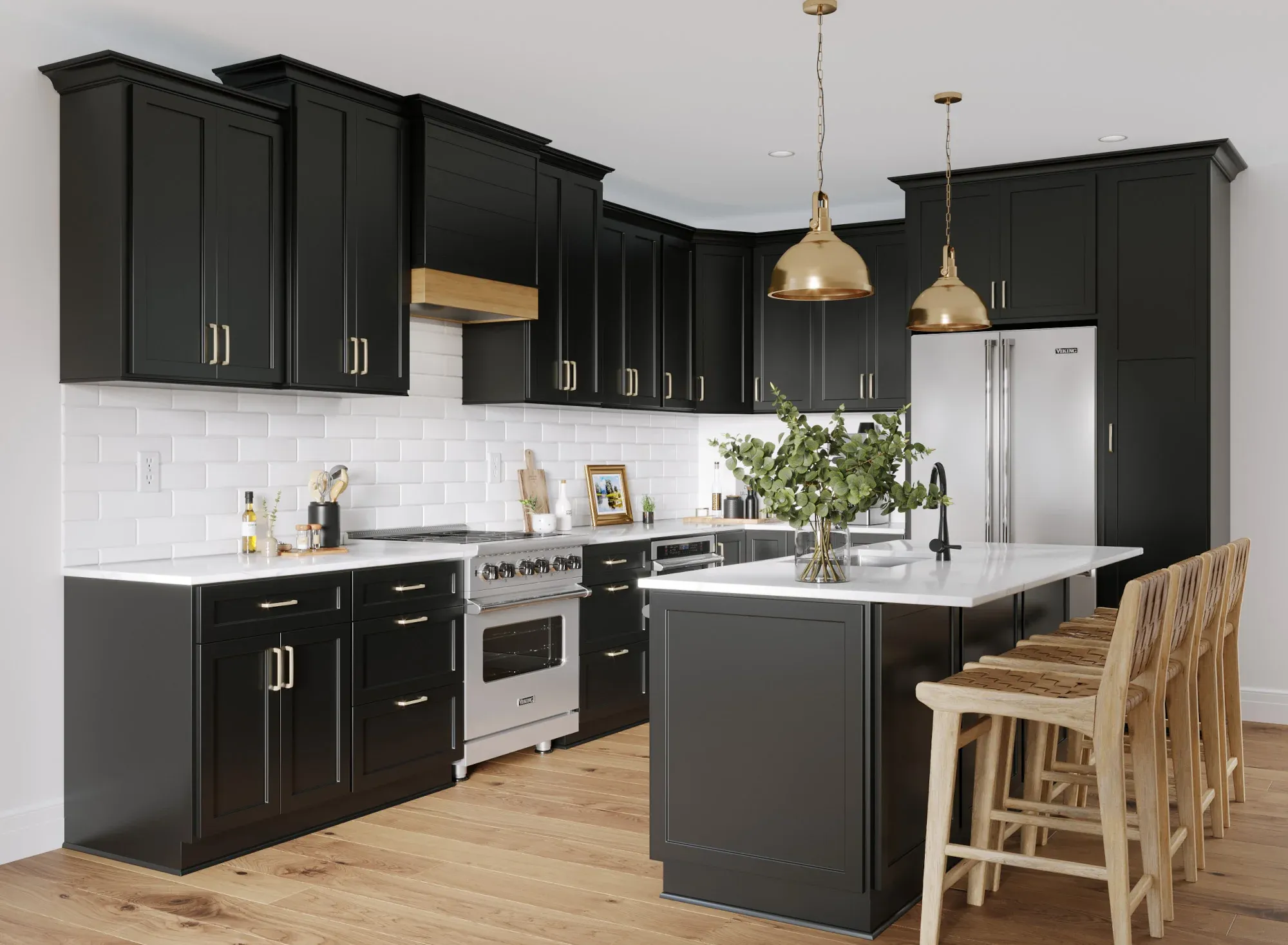
Wood is usually the first choice because it instantly softens darker colours. Oak shelving, walnut breakfast bars or even a simple timber dining table can completely change the mood of the room. Instead of feeling dramatic, the kitchen starts to feel comfortable and lived-in.
Stone surfaces achieve a similar effect. Whether you choose quartz, granite or a marble-effect worktop, the natural texture prevents the kitchen from looking flat. Even small details, such as wooden chopping boards left on display or handmade ceramic bowls, help break up large areas of black.
These aren’t expensive styling tricks either. Sometimes the smallest changes have the biggest impact.
High-gloss kitchens had their moment, and they still suit certain contemporary homes. Recently, though, matte finishes have become the preferred choice for many designers.
Part of the appeal is practical. Matte cabinets don’t draw attention to fingerprints as quickly, which is helpful in busy family kitchens where cupboards are opened dozens of times a day.
More importantly, they create a softer appearance. Instead of reflecting every light source, matte surfaces absorb light gently, allowing the room to feel calm rather than clinical.
That understated finish often looks more expensive too, especially when paired with quality hardware and subtle lighting.
People often assume black cabinets only belong in large open-plan kitchens, but that’s far from the truth.
Many older British homes have compact kitchens with limited floor space. While covering every wall in dark cabinetry might feel overwhelming, using black thoughtfully can actually create more visual depth.
A friend recently renovated her Edwardian home in Leeds. Her kitchen wasn’t particularly large, yet she decided to install black shaker-style base cabinets while keeping the upper walls light. Open oak shelves replaced some wall cupboards, and white quartz worktops reflected the natural light coming through the rear window.
The finished space felt far larger than before, not because the room had changed, but because the contrast gave it more dimension.
It’s a good reminder that colour alone doesn’t determine how spacious a room feels.
It’s easy to overlook cabinet handles when planning a renovation, but they have a surprisingly strong influence on the final result.
Brushed brass has become a favourite choice because it adds warmth without overpowering the design. Against black cabinetry, those subtle golden tones create an elegant contrast that feels sophisticated rather than showy.
For homeowners who prefer a cleaner aesthetic, slim black handles or even handleless cabinets produce a seamless contemporary finish.
Neither option is necessarily better. It simply depends on the overall style you’re hoping to achieve.
Lighting is one of those details that people sometimes leave until the very end of a renovation, yet it can completely transform how black cabinets look.
Layering different light sources usually works far better than relying on a single ceiling fitting. Pendant lights above an island create a welcoming focal point, while discreet LED strips beneath wall cabinets make food preparation easier and highlight the texture of worktops below.
Warm lighting is generally more flattering than cool white bulbs. It brings out the richness of black cabinetry and creates a kitchen that feels comfortable during long winter evenings, a feature many British households appreciate.
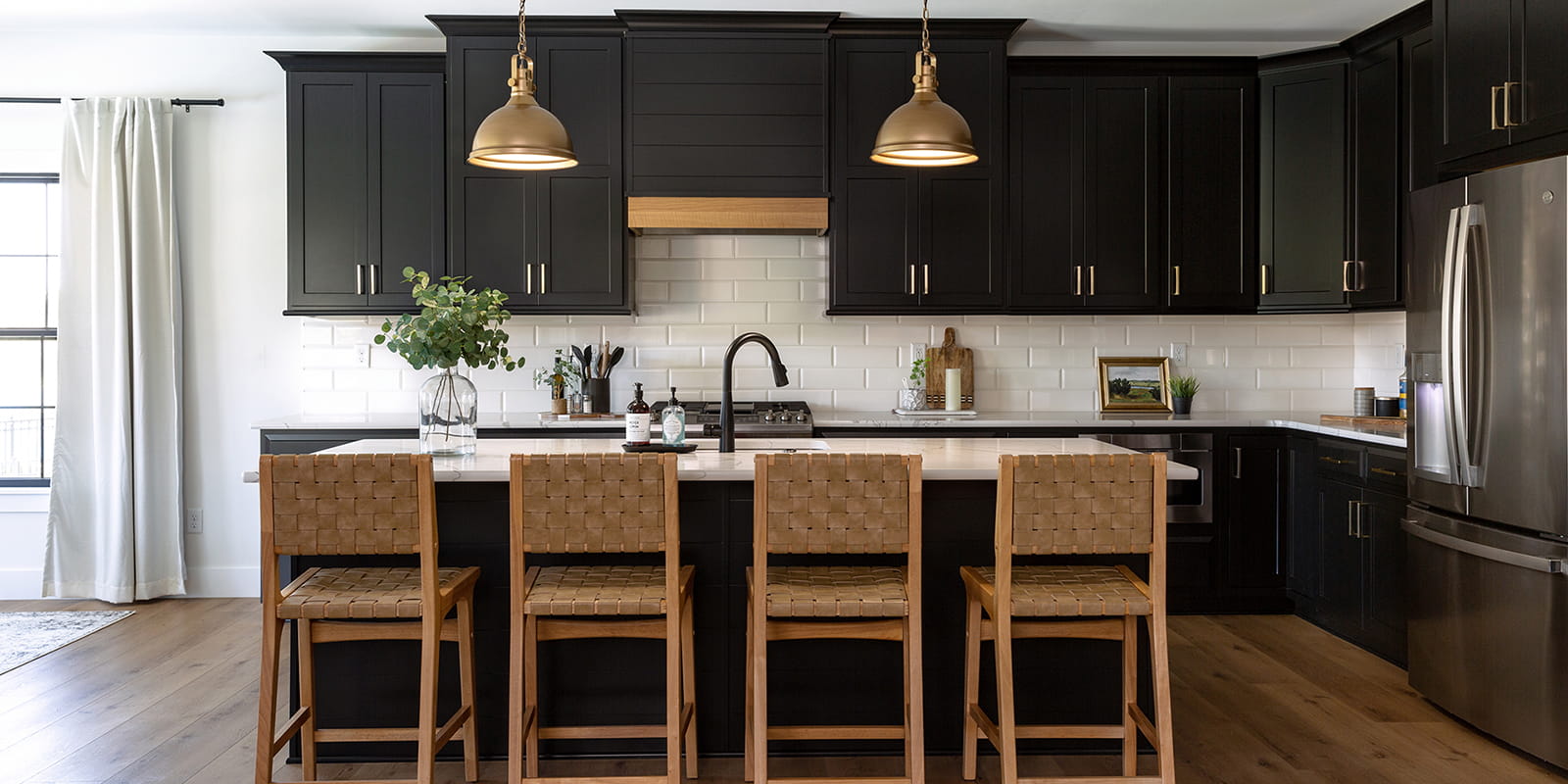
Once you’ve settled on black cabinetry, the flooring becomes just as important. It’s tempting to continue the dark colour palette, but in most UK homes, that can make the room feel heavier than intended.
Lighter timber flooring is usually a safe choice because it introduces warmth without competing for attention. Oak remains a favourite for a reason, it works with almost every kitchen style, from modern apartments to traditional cottages. If real wood isn’t practical, today’s luxury vinyl flooring does an impressive job of recreating the same look while being easier to maintain.
Stone-effect porcelain tiles are another excellent option, particularly if you’re installing underfloor heating. They give the kitchen a clean, contemporary finish and cope well with the muddy shoes, rainy weather and everyday wear that British households know all too well.
The aim isn’t to match everything perfectly. A little contrast between the floor and the cabinets often makes the whole room feel more balanced.
This is one of the first decisions many homeowners face, and the answer usually depends on the character of the property.
Shaker cabinets have remained popular because they’re incredibly versatile. Their simple framed doors suit older homes beautifully while still feeling fresh enough for modern renovations. Paint them black, add brass handles and pair them with a pale stone worktop, and you’ve got a kitchen that’s likely to look just as stylish in ten years as it does today.
Flat-panel cabinets create a completely different atmosphere. They’re clean, minimal and ideal if you prefer a contemporary aesthetic. Without decorative detailing, the focus shifts to the colour, materials and overall layout, giving the kitchen a calm, uncluttered appearance.
Neither style is right or wrong. It’s simply about choosing what feels natural in your home rather than following whatever happens to be trending online.
When people imagine a dream kitchen, they usually think about cabinets and worktops first. In reality, it’s often the finishing touches that make a space feel complete.
A few carefully chosen accessories can soften black cabinetry without making the room feel cluttered. A wooden fruit bowl on the island, a collection of ceramic mugs displayed on an open shelf or a simple vase filled with seasonal flowers can all add warmth and personality.
Plants are another easy addition. Fresh herbs such as basil, rosemary or thyme look perfectly at home on a sunny windowsill, and they’re useful when cooking too. It’s a small touch, but it helps the kitchen feel lived in rather than looking like a showroom display.
Not every kitchen makeover needs to begin with ripping everything out. In fact, some of the most successful transformations start with the cabinets already in place.
If your existing units are structurally sound, repainting them can dramatically change the room for a fraction of the cost of a full replacement. Specialist cabinet paints have improved enormously in recent years, making it possible to achieve a smooth, durable finish that stands up to everyday use.
Replacing tired handles is another affordable upgrade. It’s surprising how much difference a new set of brass or matt black handles can make to older cabinets. Pair that with updated lighting and a fresh splashback, and the kitchen can feel almost brand new without stretching the budget.
For many families, this gradual approach makes far more financial sense than undertaking a complete renovation all at once.
Black kitchen cabinets can look incredible, but there are a couple of pitfalls worth keeping in mind.
One of the most common mistakes is forgetting about lighting. Dark cabinets naturally absorb more light than pale ones, so relying on a single ceiling fitting rarely produces the best result. Layered lighting helps the room feel brighter and more welcoming, particularly during the darker winter months.
Another mistake is trying to match everything too closely. A kitchen where every surface is black can quickly lose its sense of depth. Mixing different textures and introducing lighter elements keeps the design interesting without taking away from the cabinets themselves.
It’s also worth resisting the temptation to over-style the room. A few carefully chosen accessories usually have far more impact than filling every worktop with decorative items.
One question that often comes up is whether black cabinets are difficult to keep clean. Surprisingly, they’re no more demanding than other finishes.
A soft cloth and a mild cleaning solution are usually all that’s needed for day-to-day maintenance. Wiping away spills as they happen will help preserve the finish, particularly around the hob and sink where splashes are more common.
Matte cabinets are especially forgiving because they don’t highlight fingerprints in the same way glossy surfaces can. That’s one of the reasons they’re proving so popular with families and anyone who wants a kitchen that looks smart without constant polishing.
Like any quality kitchen, a little regular care goes a long way.
Perhaps the biggest reason black kitchen cabinets continue to appeal to so many homeowners is that they don’t dictate a single style. They can feel sleek and contemporary in one home, yet warm and traditional in another. The difference comes from the materials, colours and personal touches that surround them.
Some people prefer clean lines, hidden storage and minimalist décor. Others enjoy open shelving filled with cookbooks, vintage crockery and well-used chopping boards. Black cabinets work beautifully with both approaches because they provide a calm backdrop rather than competing for attention.
That’s probably why they continue to appear in homes across the UK. They offer enough character to make a statement, yet enough flexibility to evolve as tastes change over the years.
Kitchen trends come and go, but the best designs are the ones that still feel right long after the renovation is finished. Black kitchen cabinets have earned their place because they strike that balance between style and practicality. They bring depth to a room without feeling overpowering and can be adapted to suit everything from compact city flats to spacious family homes.
If you’re considering black cabinetry, don’t be put off by the idea that it will make your kitchen feel dark. With thoughtful lighting, natural textures and a balanced colour palette, the result can be surprisingly bright, welcoming and full of character.
Ultimately, the most successful kitchens aren’t the ones that follow every trend. They’re the ones designed around the people who use them every day. If black cabinets help create a space where cooking, entertaining and family life naturally come together, then they’re more than just a design choice, they’re an investment in a kitchen you’ll enjoy for many years to come.

Lorem ipsum dolor sit amet, consectetur adipiscing elit. Ut elit tellus, luctus nec ullamcorper mattis, pulvinar dapibus leo. Ut elit tellus, luctus nec ullamcorper mattis, pulvinar dapibus leo