Try "kitchen decor", "appliances", or "renovation tips"
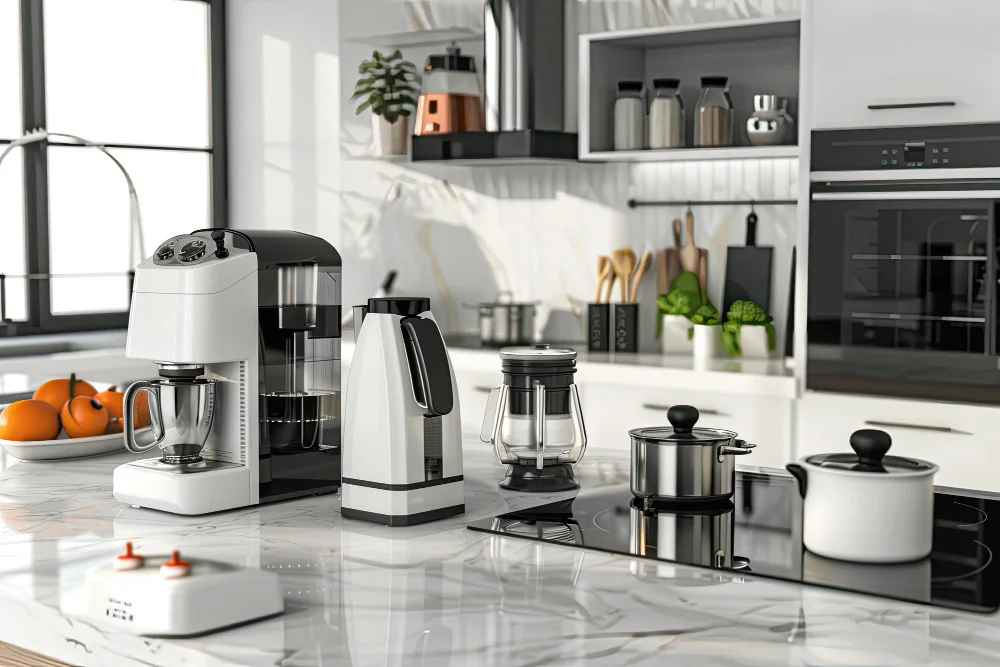
Modern kitchen appliances make everyday life easier, but they can also make a kitchen feel cluttered. Kettles, toasters, coffee machines, microwaves and food processors can quickly take over valuable worktop space, particularly in smaller UK kitchens where every inch matters. Even larger kitchens can look untidy when too many appliances are left on display.
Fortunately, hiding kitchen appliances doesn't mean putting everything away in a cupboard after every use. With thoughtful storage, clever cabinetry and a few simple design changes, you can keep frequently used appliances accessible while maintaining a clean and organised appearance.
Whether you're updating a compact flat, refreshing a family kitchen or planning a full renovation, there are plenty of practical ways to hide appliances without making your kitchen difficult to use.
The main reason homeowners choose to hide appliances is to create a cleaner and more organised kitchen. A worktop covered with electrical appliances can make even a spacious room feel cramped.
Large appliances can interrupt the visual flow of your kitchen. Concealing them behind cabinetry creates a more streamlined appearance and allows features such as worktops, splashbacks and kitchen units to stand out.
This can be particularly effective in open-plan homes, where the kitchen is visible from the dining or living area.
Keeping appliances inside cupboards can also free up preparation space. This is useful if you regularly cook meals that require chopping, mixing and assembling ingredients.
Instead of moving appliances around every time you need to prepare food, you can create dedicated storage areas that keep them accessible without leaving them permanently on display.
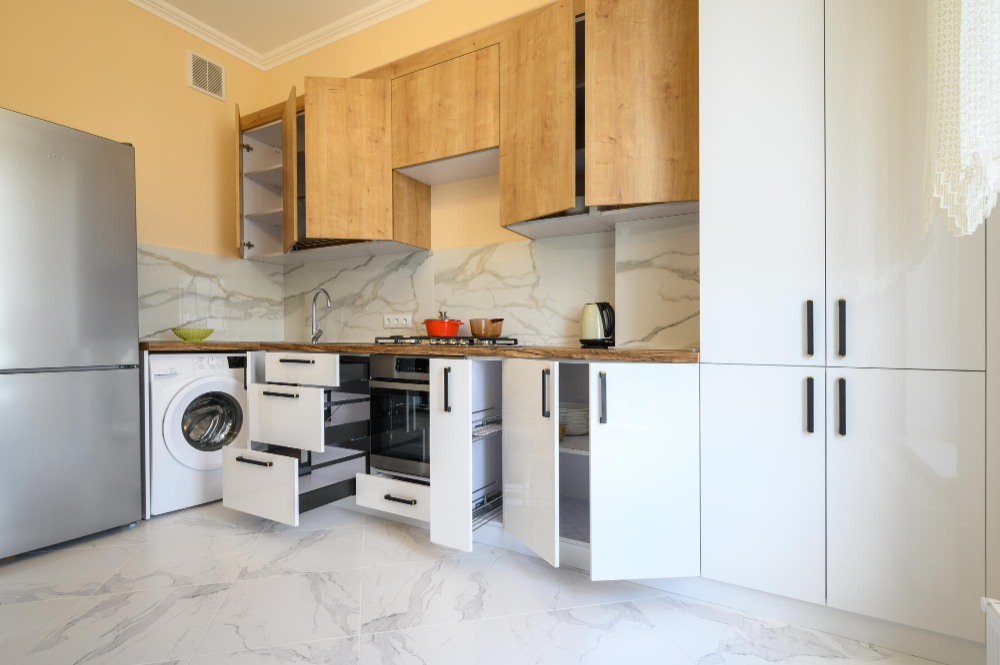
One of the simplest solutions is to create dedicated appliance storage within your existing cabinetry.
An appliance cupboard can hold everyday items such as:
You can keep the cupboard door closed when the appliances aren't being used, instantly making the kitchen look tidier.
If the appliances are used regularly, make sure the cupboard is positioned somewhere convenient rather than in an awkward corner.
Adjustable shelves can make an appliance cupboard much more flexible. You can position shelves according to the size of your equipment and leave enough room for cables and accessories.
Avoid overcrowding the cupboard. Heavy appliances should be stored securely and shelves should be suitable for the weight they're expected to carry.
A dedicated breakfast station is a particularly useful solution for busy households.
Instead of leaving your kettle, toaster, coffee machine and cereal containers across the worktop, group them together inside a cabinet or pantry-style unit.
A practical breakfast station might contain:
The cabinet can remain closed when the area isn't being used, giving you a clean worktop and reducing visual clutter.
This approach works especially well in larger kitchens with tall units or unused wall space.
If you want appliances to remain on the worktop but disappear visually when they're not being used, consider pocket or bi-fold cabinet doors.
These doors can open to reveal an appliance area and then close again when everything is finished.
Pocket doors are useful because they don't necessarily require you to remove appliances from the worktop. Instead, the equipment remains in its designated position.
They can be particularly effective for:
Make sure there is sufficient ventilation and that appliances are only operated in a way permitted by the manufacturer. Heat-producing appliances should never be enclosed in a way that creates a safety risk.
Microwaves can be among the most visually dominant small appliances in a kitchen.
If yours takes up valuable worktop space, consider moving it into a dedicated cabinet or integrated housing.
An integrated microwave can sit neatly within a run of cabinetry, creating a more cohesive appearance.
Another option is a built-in appliance tower where the microwave sits above or below the oven.
When planning this arrangement, think about accessibility. The microwave should be positioned at a comfortable height and shouldn't require you to lift hot food over your head or reach awkwardly.
Large refrigeration appliances are more difficult to hide, but integrated models can create a much more seamless appearance.
An integrated fridge freezer is fitted behind a matching kitchen door, allowing it to blend into the surrounding cabinetry.
This can be particularly effective in minimalist kitchens where you want a continuous run of cabinets.
However, integrated models can have different capacities from similarly sized freestanding appliances, so check the usable internal storage before making a decision.
For a busy family, losing too much fridge or freezer capacity simply for aesthetic reasons may not be worthwhile.
A pantry can provide excellent storage for appliances that aren't used every day.
Instead of dedicating several kitchen cupboards to equipment, you can keep larger items together in one organised area.
Depending on your space, you could store:
This keeps rarely used appliances out of sight while still making them easy to find when needed.
Remember to allow appliances to cool completely before storing them and keep electrical equipment dry.
If your kitchen has an island, don't waste the storage potential underneath it.
The base of an island can accommodate drawers, cupboards and even dedicated appliance zones.
Deep drawers can store heavier equipment such as mixers and food processors, while smaller drawers can hold cables, accessories and utensils.
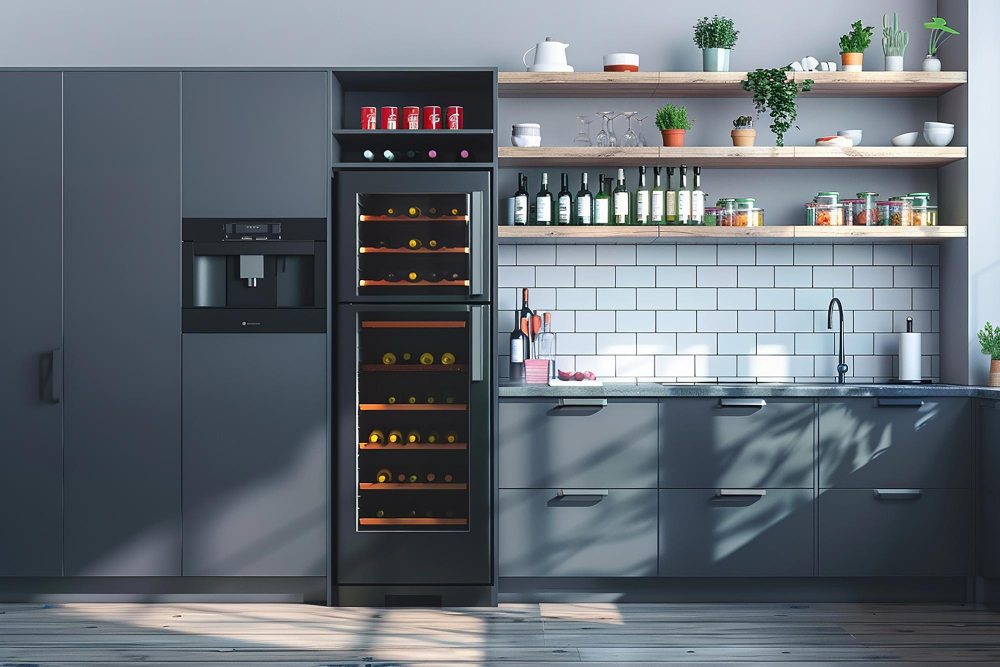
An island can also be a useful location for a built-in microwave or wine cooler if these suit your household's needs.
The key is to plan storage according to how you use the kitchen rather than simply filling every available space.

Tall kitchen cabinets provide another opportunity to conceal appliances.
A full-height cabinet can house several pieces of equipment while keeping the main kitchen area visually uncluttered.
An appliance tower could combine:
This creates a single functional zone rather than scattering appliances around the kitchen.
For UK kitchens with limited wall space, tall storage can be particularly useful because it makes better use of vertical space.
An appliance garage is a small, dedicated section of cabinetry designed to hide countertop appliances.
The concept is simple: the appliance stays connected and ready to use, but a door or shutter conceals it when you're finished.
This can work particularly well for:
Before installing one, check that the space provides appropriate ventilation and electrical access. Heat-producing appliances should not be operated inside enclosed cabinetry unless the appliance and cabinet design specifically allow it.
For homeowners planning a new kitchen, matching cabinet panels can hide larger appliances.
Dishwashers, washing machines and refrigeration appliances can sometimes be integrated behind doors that match the rest of the kitchen.
Matching panels create visual consistency. Instead of seeing several different appliance finishes, you see a continuous run of cabinetry.
This can be especially useful in open-plan kitchens where the kitchen forms part of the main living space.
However, integrated appliances can be more expensive and may be less straightforward to replace, so consider long-term practicality before choosing them.

Deep drawers aren't just for cutlery and pans. They can also be excellent for storing smaller kitchen equipment.
A deep drawer can hold a blender, hand mixer or sandwich maker without requiring you to reach into the back of a cupboard.
Use simple organisers to prevent equipment from becoming tangled.
Keep accessories with the appliance they belong to and avoid storing too many heavy items together. This makes it easier to retrieve equipment and reduces unnecessary handling.
Even when appliances themselves are neatly arranged, cables can make a kitchen look messy.
Cable management is therefore an important part of creating a tidy appearance.
You can:
Never overload sockets or use electrical equipment in a way that conflicts with the manufacturer's instructions.
If your kitchen is connected to a utility room, this can be an excellent place to relocate appliances that don't need to be in the main cooking area.
Washing machines, tumble dryers and some larger countertop appliances can potentially be moved into a separate utility space where appropriate.
This leaves the main kitchen focused on cooking, food preparation and socialising.
For many UK homes, particularly properties with limited kitchen space, a well-organised utility room can dramatically reduce visual clutter.
Although hiding appliances can make a kitchen look fantastic, practicality should come first.
If you use your coffee machine six times a day, putting it in a cupboard that requires several steps to access may become frustrating.
A simple approach is:
Daily-use appliances: Keep them easily accessible.
Several-times-a-week appliances: Store them nearby.
Occasional appliances: Put them in deeper storage or a pantry.
Rarely used appliances: Consider storing them outside the main kitchen if suitable.
This gives you a tidy kitchen without making everyday tasks unnecessarily inconvenient.
One of the most important considerations when hiding kitchen appliances is ventilation.
Not every appliance is designed to operate inside an enclosed cupboard. Heat-producing equipment may require airflow around it, while refrigeration appliances have specific installation requirements.
Always check:
Never block ventilation openings or modify an appliance installation simply to make it look tidier.
If you're unsure, ask a qualified kitchen installer or appropriate professional before making changes.
It's easy to create beautiful concealed storage but accidentally lose useful cupboard capacity.
Before dedicating an entire cabinet to appliances, measure the equipment you want to store and consider how much space remains.
A well-designed cabinet should provide both appliance storage and practical everyday storage where possible.
For example, adjustable shelving above a coffee machine could hold mugs, coffee pods or tea supplies, turning one cabinet into a multifunctional station.
You don't necessarily need expensive bespoke cabinetry to hide appliances.
Try simple changes such as:
Sometimes the biggest improvement comes from removing appliances that you haven't used in months.
Hiding kitchen appliances is less about making every appliance disappear and more about creating a kitchen that feels organised and intentional.
Use dedicated cupboards for small appliances, consider integrated options for larger equipment and make use of islands, tall units, pantries and utility spaces where available. At the same time, keep frequently used appliances within easy reach so that a tidy kitchen doesn't become an inconvenient one.
For UK homeowners, this can be particularly valuable in smaller kitchens where worktop and storage space are limited. With thoughtful planning, even a kitchen packed with useful equipment can feel calm, spacious and uncluttered.
The best solution is one that combines appearance with practicality. Your appliances should be easy to access when you need them, safely stored when you don't and organised in a way that makes everyday kitchen life simpler.

Make more of your kitchen with practical tips on furniture, decor, appliances, cleaning and renovation. Discover useful guides and food ideas to create a space that works beautifully every day.