Try "kitchen decor", "appliances", or "renovation tips"
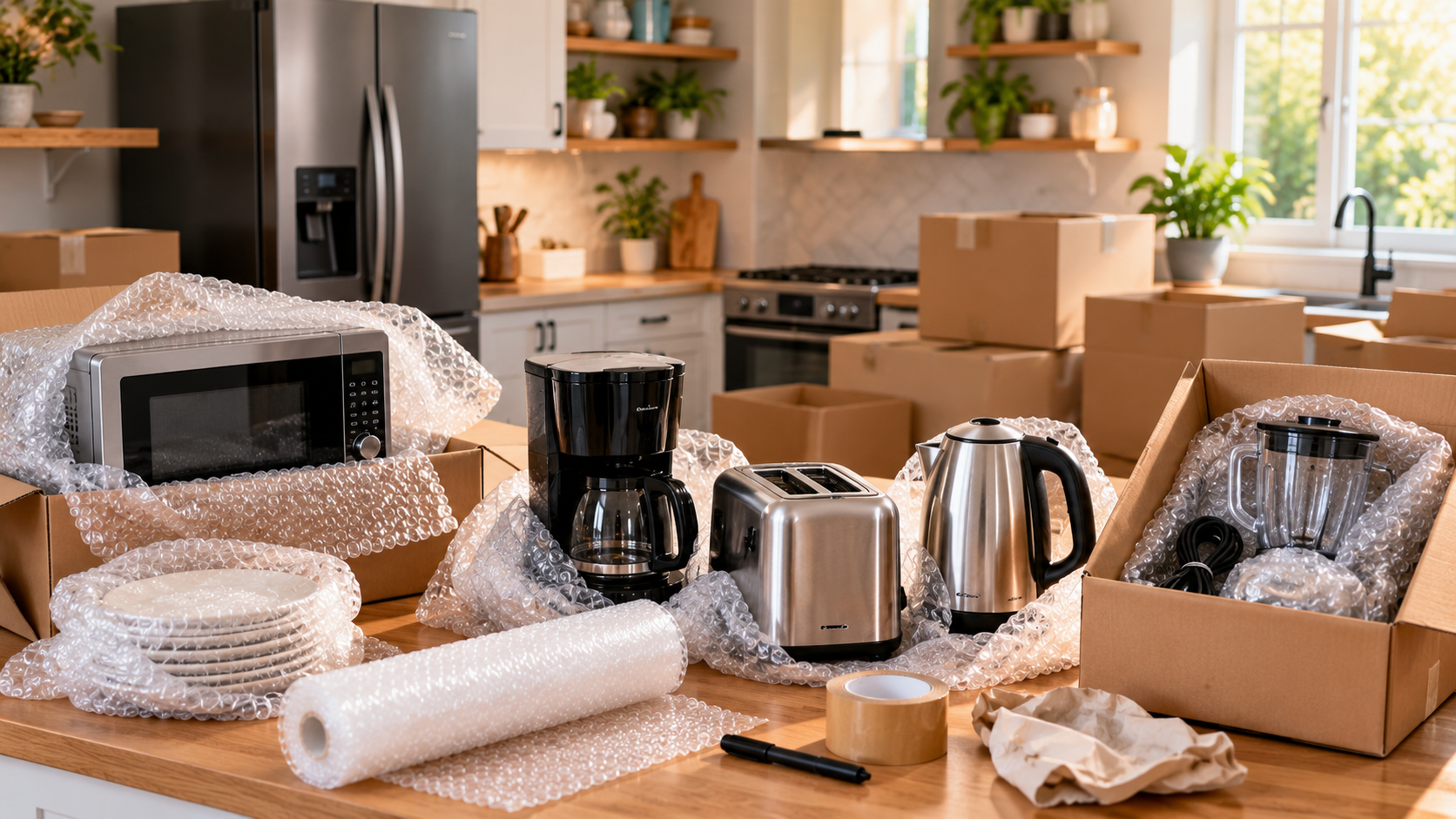
Moving house can be exciting, but packing a kitchen is often one of the most time-consuming parts of the process. Kitchen appliances are particularly challenging because they can be heavy, fragile, awkwardly shaped and expensive to replace. From microwaves and coffee machines to ovens, fridges and dishwashers, each appliance needs the right preparation before it is moved.
Poor packing can result in scratched surfaces, broken doors, damaged cables or internal components that stop working after the move. Taking a little extra time to prepare your appliances properly can help protect them during transport and make unpacking much easier.
Whether you're moving from a flat in London, a terraced house in Manchester or a family home elsewhere in the UK, this guide explains how to pack kitchen appliances safely and efficiently.
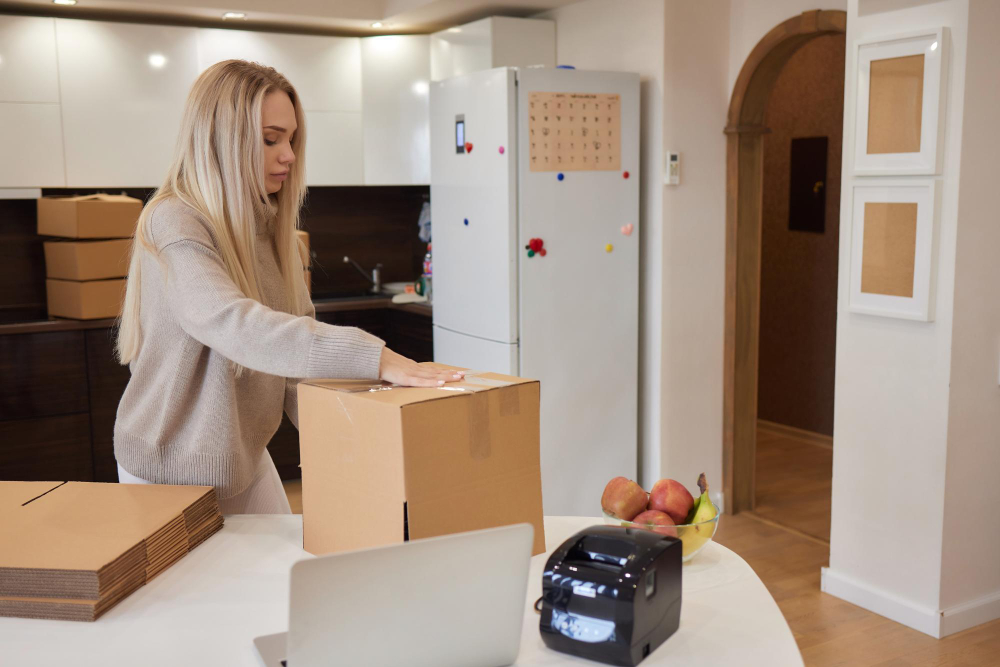
Don't leave appliance packing until the last minute. Some appliances need to be cleaned, emptied, defrosted or disconnected before they can be safely transported.
Start by listing every appliance you plan to move, including:
Mark each appliance according to whether it is being moved, sold, donated or disposed of.
This simple step can prevent confusion when you're dealing with dozens of boxes and household items.
You don't necessarily need specialist moving supplies for every appliance, but having suitable protective materials will make the process much easier.
Keep the following materials available:
For larger appliances, blankets and sturdy straps are often more useful than traditional cardboard boxes.
Avoid relying on thin household boxes for heavy equipment. A box that looks strong can easily collapse when carrying a bulky appliance.
Cleaning appliances before a move might seem unnecessary, particularly when you're already dealing with dozens of other jobs. However, it's much easier to clean them while they're empty and accessible.
Food residue and grease can attract odours and pests during storage or transport. Moisture can also become trapped inside closed appliances.
Before packing, clean and dry surfaces thoroughly.
For small appliances, wipe away crumbs, grease and food residue. Remove detachable parts and clean them separately where appropriate.
Make sure everything is completely dry before wrapping or boxing it.
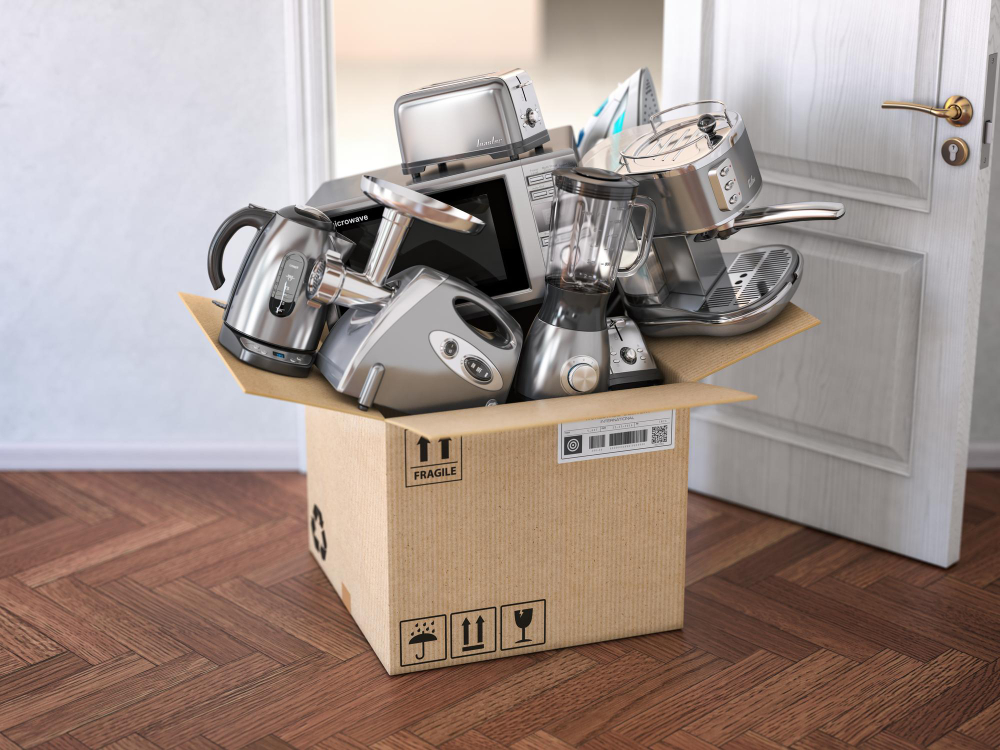
Small appliances are generally easier to move, but they can still be damaged if they're simply thrown into a box with other kitchen equipment.
If you still have the original box and protective inserts, use them.
Manufacturers design packaging around the shape of the appliance, so the original packaging can provide excellent protection.
If you don't have it, wrap the appliance carefully in bubble wrap or protective paper and place it inside a suitably sized box.
Avoid leaving large empty spaces around the appliance. Fill gaps with packing paper or other protective material so the item doesn't move around during transport.
Cables can easily become tangled, lost or damaged during a house move.
Before packing an appliance, coil its cable loosely and secure it with a reusable tie.
Don't wind cables excessively tightly because this can put unnecessary stress on them.
Place detachable accessories in a labelled bag and keep them with the appliance.
For example, a food processor's blades, bowls and attachments should be kept together rather than distributed between different kitchen boxes.
Microwaves are relatively heavy for their size, so they need a strong box and sufficient padding.
Start by removing any loose components, such as a glass turntable and roller ring.
Wrap the glass turntable separately using bubble wrap and place it somewhere where it won't move during transportation.
Wrap the microwave itself thoroughly, paying particular attention to corners and the control panel.
Place it in a strong box with padding around all sides. Clearly label the box as FRAGILE and indicate which side should remain upright where appropriate.
Coffee machines can contain removable water tanks, trays and other small components that can easily break.
Empty and clean the machine thoroughly.
Remove:
Wrap removable components separately and secure them inside the same labelled box.
If your machine has been used recently, allow it to dry completely before packing.
A fridge freezer requires more preparation than most other kitchen appliances.
Remove all food before moving day. Frozen food should be transferred to a suitable cooler or arranged for disposal if it cannot safely be transported.
If your freezer requires manual defrosting, allow enough time for the ice to melt completely.
Once defrosted, clean and dry the interior.
Keep the doors closed during transportation, but don't seal them in a way that could damage the appliance.
Use suitable straps or tape to prevent doors from swinging open, while following the manufacturer's moving instructions.
Shelves and drawers should ideally be removed and packed separately to prevent them from moving around inside the appliance.
Once the fridge freezer reaches your new home, don't necessarily switch it on immediately.
The correct waiting period can depend on the appliance and how it was transported. Check the manufacturer's instructions for specific guidance, particularly if the appliance was tilted significantly during the move.
Once installed, make sure it is level and has the recommended ventilation clearance.
Ovens and cookers can be heavy and difficult to handle.
Remove oven shelves, trays and other loose components where possible and pack them separately.
If the appliance has a glass door, protect it carefully with suitable padding.
Never attempt to disconnect a gas appliance yourself unless you're appropriately qualified to do so.
For gas cookers, arrange disconnection and reconnection through a suitably qualified professional.
Before moving a dishwasher, it needs to be disconnected properly from both the water supply and electrical connection.
Once disconnected:
Keep screws, fittings and connection components in a labelled bag so they're easy to locate at the new property.
Doors, handles and control panels can be particularly vulnerable during transportation.
Wrap handles separately where necessary and place protective cardboard over control panels or glass surfaces.
Avoid applying strong adhesive tape directly to delicate finishes because removing it could leave residue or damage the surface.
Moving blankets can provide excellent protection for larger appliances without requiring excessive amounts of plastic packaging.
When you're moving house, organisation becomes incredibly valuable.
Don't simply write "Kitchen" on every box.
Instead, label boxes according to their contents.
For example:
COFFEE MACHINE — FRAGILE — KITCHEN
or
FOOD PROCESSOR — ACCESSORIES INSIDE
This makes unpacking significantly faster and reduces the chance of accidentally damaging something while searching through boxes.
A simple photograph can save a surprising amount of time when you're reconnecting appliances.
Before disconnecting anything, take clear photographs of:
These photos can act as a useful reference when setting everything up again.
For plumbing or gas connections, however, follow the manufacturer's instructions and use an appropriately qualified professional where required.

Packing is only half the job. Appliances also need to be handled carefully during loading and transport.
Follow the manufacturer's transportation instructions for each appliance.
Use suitable lifting equipment and straps for heavy appliances rather than trying to carry them without assistance.
Never place heavy boxes on top of smaller appliances.
For delicate items, keep them away from areas where they could be crushed or struck by furniture.
Large appliances can be difficult to move without the right equipment.
If you're moving a fridge freezer, range cooker or other particularly heavy appliance, professional movers may be worth considering.
Professional assistance can be useful when:
A professional removal team can also help reduce the risk of damage to your appliances, walls, floors and doorways.
Moving heavy appliances can easily damage flooring.
Before moving anything through the property, protect vulnerable floors with suitable coverings.
Pay particular attention to:
Use appropriate appliance-moving equipment rather than dragging appliances across the floor.
Don't immediately unpack everything.
First, decide where each major appliance will go and make sure the necessary connections are available.
A practical order might be:
This allows you to establish the main kitchen functions first.
Check that each appliance is level, stable and positioned according to the manufacturer's installation requirements.
Before switching everything on, inspect each appliance for signs of damage.
Look for:
If something appears damaged, don't use the appliance until you've established whether it is safe.
Take photographs of any damage immediately, particularly if professional movers or a removal company transported the appliance.
It's tempting to use every available bit of space when moving house, but appliances need protection from impacts.
Allow sufficient padding around fragile equipment.
For small appliances, don't place several heavy objects on top of one another simply to save space.
A little extra packing material is usually much cheaper than replacing a damaged appliance.
Packing kitchen appliances for a house move requires more planning than packing ordinary household items, but careful preparation can prevent many common problems.
Start by cleaning and preparing appliances well before moving day. Use strong boxes for smaller equipment, protect larger appliances with suitable padding and keep cables, accessories and fittings organised.
Fridges, dishwashers, ovens and gas appliances require particular attention, so always follow the manufacturer's instructions and use qualified professionals where necessary.
Most importantly, don't rush the process. Label everything, photograph connections before disassembly and inspect appliances carefully once they arrive at your new home.
With a little organisation and the right protective materials, you can move your kitchen appliances safely and have your new kitchen back up and running with far less stress.

Make more of your kitchen with practical tips on furniture, decor, appliances, cleaning and renovation. Discover useful guides and food ideas to create a space that works beautifully every day.