Try "kitchen decor", "appliances", or "renovation tips"

A white kitchen gives you one of the most versatile starting points when designing or updating your home. White cabinets can make a room feel brighter, more spacious and timeless, but choosing the right appliance colour can have a major impact on the finished look. The appliances you select can either blend quietly into the kitchen or become striking design features.
From classic stainless steel and sophisticated black to softer colours and warmer metallic finishes, there are plenty of options to consider. The best choice depends on your kitchen style, natural light, worktop, flooring and the overall atmosphere you want to create.
For UK homeowners, this flexibility is particularly useful because kitchens vary enormously, from compact flats and narrow terraced-house kitchens to spacious open-plan extensions. Whether you're replacing one appliance or planning a complete kitchen makeover, this guide will help you choose an appliance colour that works beautifully with white cabinetry.

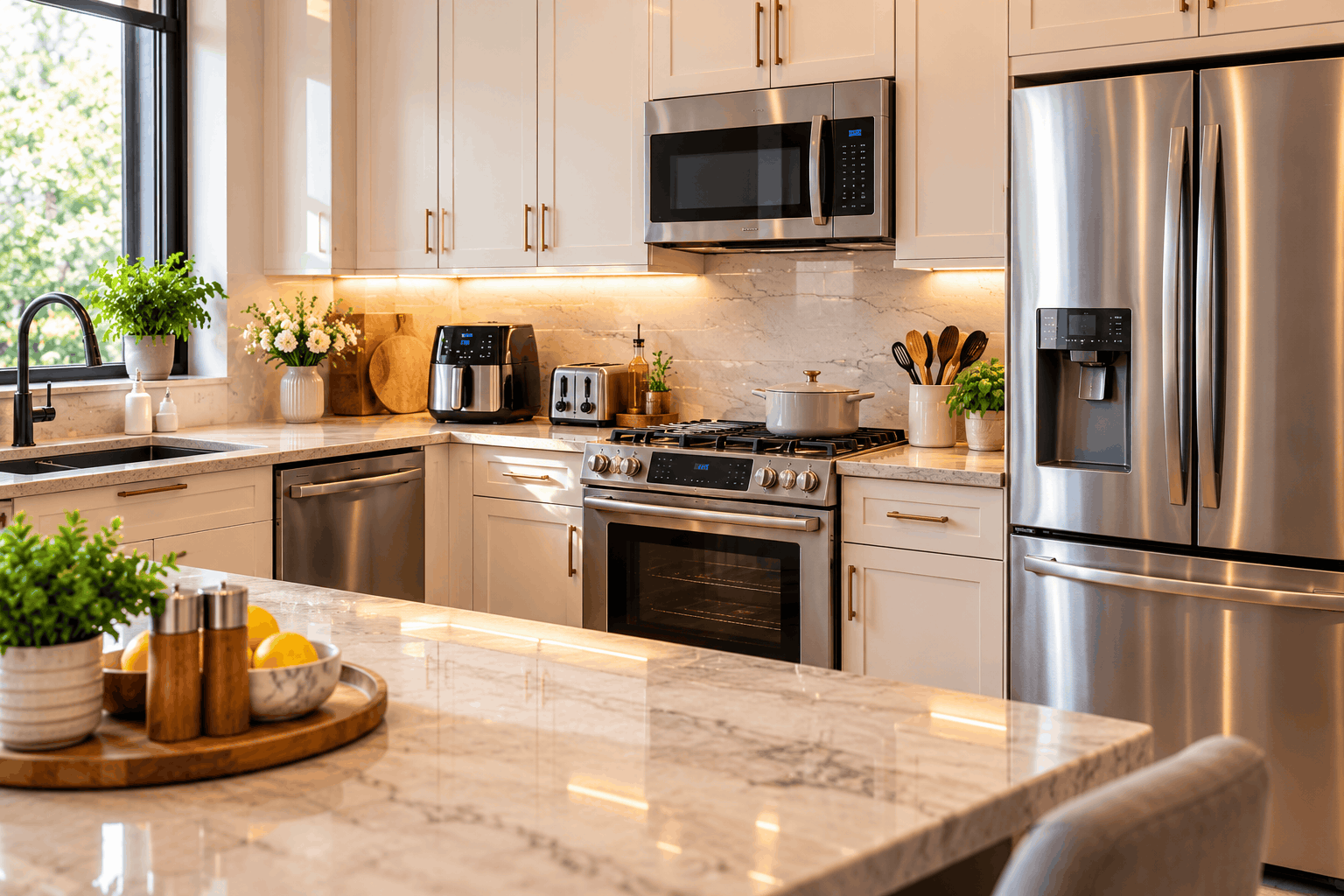
Stainless steel remains one of the safest and most versatile choices for a white kitchen. Its neutral metallic appearance complements white cabinets without creating an overly strong contrast.
Stainless steel appliances can give a white kitchen a clean and contemporary appearance while adding a little visual depth.
They work particularly well with:
Stainless steel is also a practical choice if you plan to replace appliances gradually. Because the finish is relatively neutral, new appliances can often be introduced without completely redesigning the kitchen.

Black appliances create a much stronger contrast than stainless steel. They can turn otherwise simple white cabinetry into a bold and contemporary kitchen design.
Black works particularly well when the colour is repeated elsewhere in the room.
You could introduce black through:
This prevents the black appliances from looking disconnected from the rest of the kitchen.
For a smaller UK kitchen, combining black appliances with white cabinets and a pale worktop can provide contrast without making the room feel too dark.
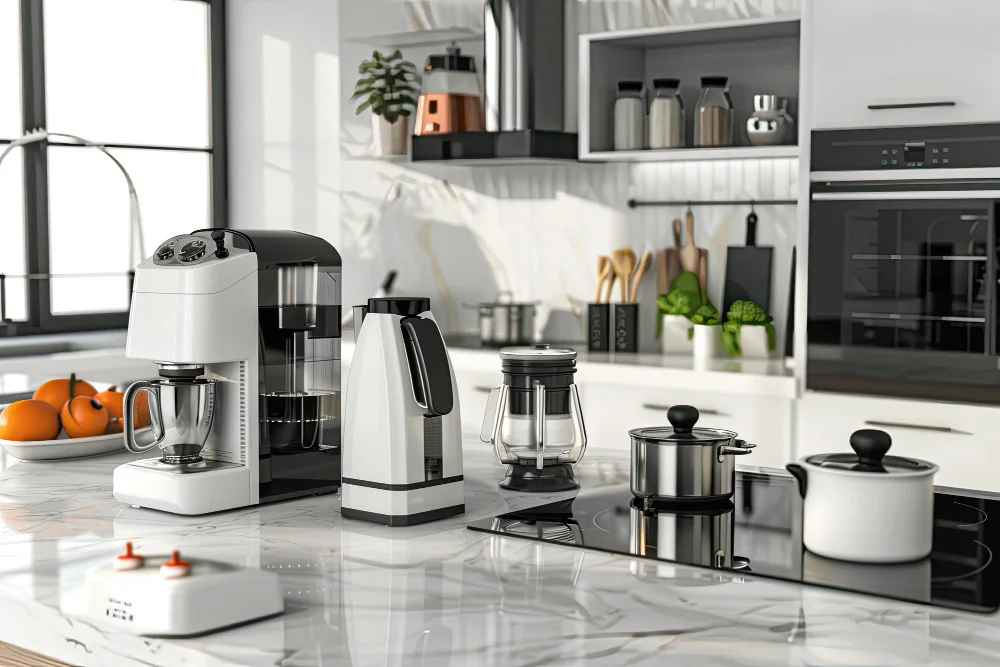
Choosing white appliances creates a softer and more understated appearance.
White ovens, dishwashers, fridges and smaller appliances can blend into white cabinetry, particularly when you want the kitchen to feel calm and uncluttered.
White appliances are especially suitable for:
The main consideration is that slightly different shades of white can sometimes be noticeable. If your cabinets have a warm cream undertone, a very bright white appliance may look slightly mismatched.
Try to compare finishes in the actual kitchen before making a final decision.

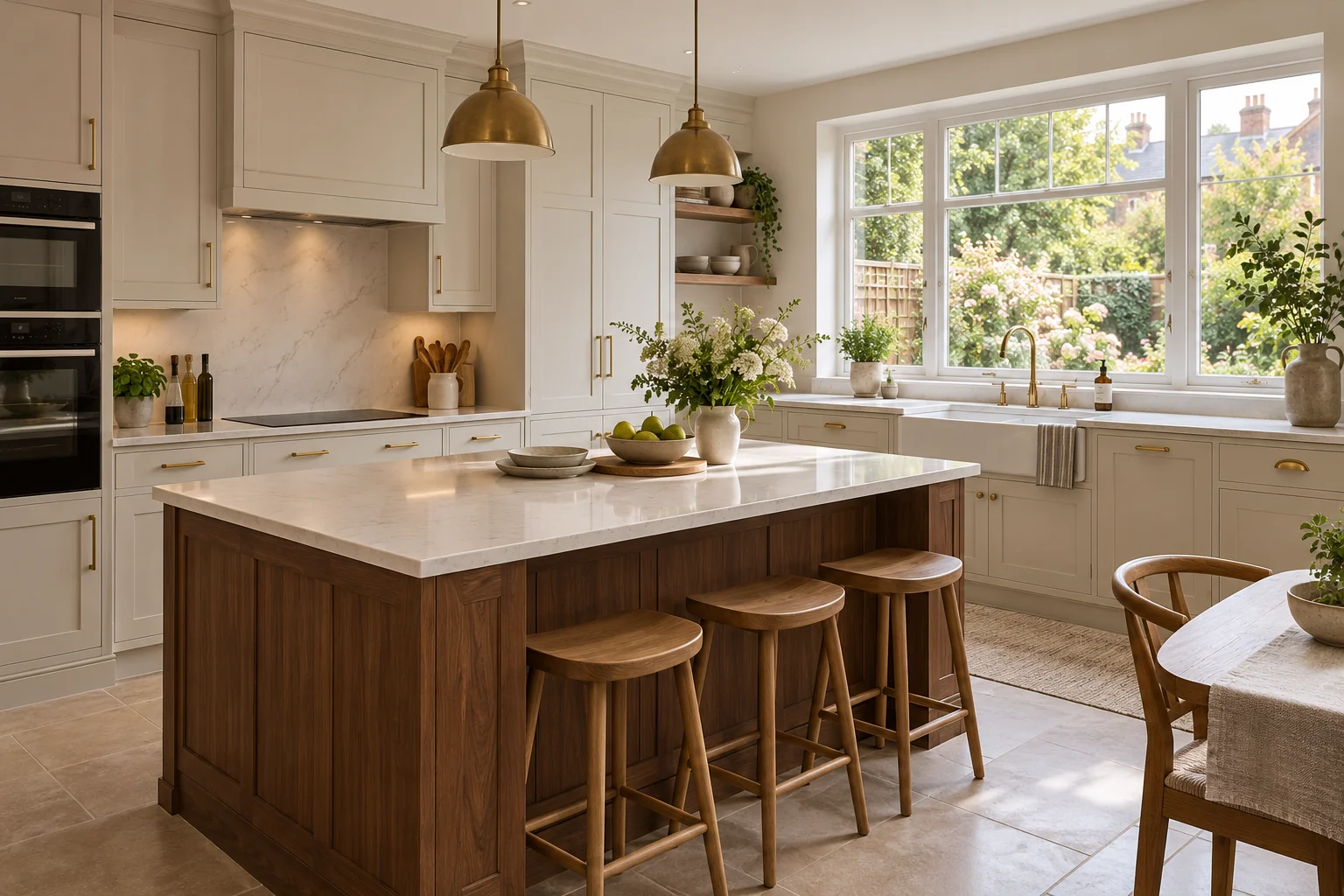
Cream and off-white appliances can create a warmer appearance than bright white.
These finishes can work particularly well with traditional Shaker kitchens, natural timber and warm neutral walls.
Pair cream-toned appliances with:
This combination can be particularly attractive in period properties where an ultra-modern stainless-steel look might feel slightly out of place.
If you're looking for something more distinctive, metallic finishes with warm gold or brass tones can add a luxurious feel.
You don't necessarily need a full set of brass appliances. Even a smaller appliance in a warm metallic finish can become an attractive focal point.
Too much metallic detailing can make a kitchen feel visually busy.
If you choose warm metallic appliances, repeat the finish subtly through cabinet handles, taps or lighting rather than using several competing metal finishes.
Grey appliances can provide a softer alternative to black while still introducing contrast against white cabinetry.
Light or medium grey appliances can create a contemporary appearance without making the room feel as dramatic as a completely black appliance set.
Grey appliances work especially well with:
This combination can create a modern but comfortable kitchen rather than an overly clinical one.
Navy appliances are less common, but they can add considerable personality to a white kitchen.
The contrast is noticeable without being as stark as black.
A navy range cooker or small appliance can become a focal point against white cabinetry.
For a cohesive look, repeat the navy shade through accessories, bar stools, textiles or a kitchen island.
This can work particularly well in traditional or coastal-inspired kitchens.

Muted green appliances can add colour while maintaining a relatively natural appearance.
Sage, olive and other subdued green tones can complement white cabinets beautifully.
For a relaxed kitchen, combine green appliances with:
This approach works particularly well if you want the kitchen to feel warm and characterful rather than purely modern.
You don't need to choose a bold colour for every major appliance.
Small appliances can be an easier way to experiment with colour without making a permanent commitment.
Consider introducing colour through:
For example, a soft blue kettle and toaster can introduce personality into an otherwise neutral white kitchen.
If you get tired of the colour later, replacing two small appliances is considerably easier than replacing an oven or fridge freezer.
There is no strict rule that says every appliance has to be the same colour.
However, having too many different finishes can make the kitchen look unplanned.
Matching major appliances is usually the safest option if you want a polished and cohesive appearance.
For example:
White cabinets + stainless-steel oven + stainless-steel fridge + stainless-steel dishwasher
creates a consistent visual language.
Mixing can work when there is a clear design reason.
For example, you might have stainless-steel major appliances with black handles, taps and smaller appliances. The repeated black accents help connect the different finishes.
The appliance colour shouldn't be selected independently from your worktop.
A white kitchen with a dark worktop will naturally support stronger appliance contrast, while a pale worktop can help maintain a lighter overall appearance.
Some combinations worth considering include:
Look at the entire combination rather than judging the appliance finish on its own.
Flooring is another element that can affect how appliance colours appear.
Light flooring can help balance dark appliances, while darker flooring can create a more dramatic and sophisticated appearance.
You don't need to match the floor directly to your appliances.
Instead, think about the overall balance of light and dark elements.
For example, black appliances, white cabinets and warm oak flooring can create a comfortable contrast without making the kitchen feel too monochromatic.
The size of your kitchen should influence your appliance colour choice.
In a compact kitchen, lighter colours can help maintain an open appearance.
White or stainless-steel appliances can blend into the room, while black appliances can provide contrast without necessarily making the space feel smaller if they're balanced with plenty of light surfaces.
Larger kitchens give you more freedom to experiment.
You can use darker appliances or stronger colours as statement features without overwhelming the room.
Open-plan kitchens can particularly benefit from a coordinated appliance colour because the kitchen is often visible from other living areas.
Always consider how much natural light enters your kitchen.
A bright south-facing kitchen may handle darker finishes comfortably, whereas a darker north-facing room may benefit from lighter appliance colours and warmer surrounding materials.
If possible, look at appliance finishes in your actual kitchen.
Colours can appear different under:
A finish that looks perfect in a showroom may look completely different at home.
Your preferred interior style should influence your appliance colour.
Black, stainless steel and grey appliances tend to work particularly well with contemporary cabinetry.
Cream, white, stainless steel and selected coloured appliances can complement traditional Shaker kitchens.
Black appliances, stainless steel and darker metallic finishes can work particularly well alongside exposed materials and darker worktops.
White appliances, stainless steel and soft neutral colours can help maintain the bright, simple appearance associated with Scandinavian design.
They don't have to match exactly, but coordinating them can make the kitchen feel more intentional.
For example, black appliances paired with black handles create a strong visual connection.
Stainless-steel appliances can work well with brushed-metal handles, while cream cabinetry and warmer appliances can be complemented by brass-style hardware.
The important thing is consistency rather than perfection.
You don't have to replace your entire appliance collection to update your kitchen.
If your existing appliances are still working well, consider changing smaller elements first.
You could:
This can help create a more cohesive kitchen without the cost of a complete appliance replacement.
A white kitchen gives you an excellent foundation because almost any appliance colour can work with it when the overall design is balanced.
Stainless steel is a dependable choice for a timeless contemporary look, while black appliances provide stronger contrast and a more dramatic feel. White and cream appliances create a softer appearance, while colours such as sage green, navy and muted blue can introduce personality.
Before making your decision, consider your kitchen's size, natural light, worktops, flooring, handles and overall style. If you're unsure, test finishes in the actual room rather than relying entirely on showroom lighting.
Most importantly, don't feel that every appliance has to follow a trend. Choose colours that you genuinely enjoy seeing every day and that fit naturally into your home.
With the right combination, white cabinets and carefully selected appliances can create a kitchen that feels bright, balanced, practical and distinctly your own.

Make more of your kitchen with practical tips on furniture, decor, appliances, cleaning and renovation. Discover useful guides and food ideas to create a space that works beautifully every day.