Introduction
Two-tone kitchen cabinets go beyond simple decoration; they are a purposeful design choice that thoughtfully addresses scale, light, and functionality. As kitchens transform into versatile, multi-use spaces, uniform cabinetry often falls short in balancing aesthetics with practical zoning. Two-tone cabinetry offers a clever solution by creating contrast where clarity is needed and maintaining restraint where seamless flow is important.
Rather than using colour for novelty, this approach uses contrast to define form, enhance proportions, and manage visual weight. When executed intentionally, two-tone cabinets transform kitchens from static designs into dynamic, layered environments full of spatial coherence and visual interest.
10+ Two-Tone Kitchen Cabinet Ideas
Whether it’s about adding tonal shading or selecting contrasting colours, these ideas effortlessly turn your space into a chic cooking haven. Featuring real-life examples from Kitchen Hack’s customer homes, this collection aims to inspire homeowners with:
Wood Tones and Neutrals: Combine natural wood finishes on lower cabinets or a kitchen island with soft neutrals such as cream or light grey on upper cabinets for a warm, Scandinavian feel.
Black and White: A timeless and sophisticated palette, using black base cabinets with white wall units creates a dramatic, high-contrast look that works in any kitchen style.
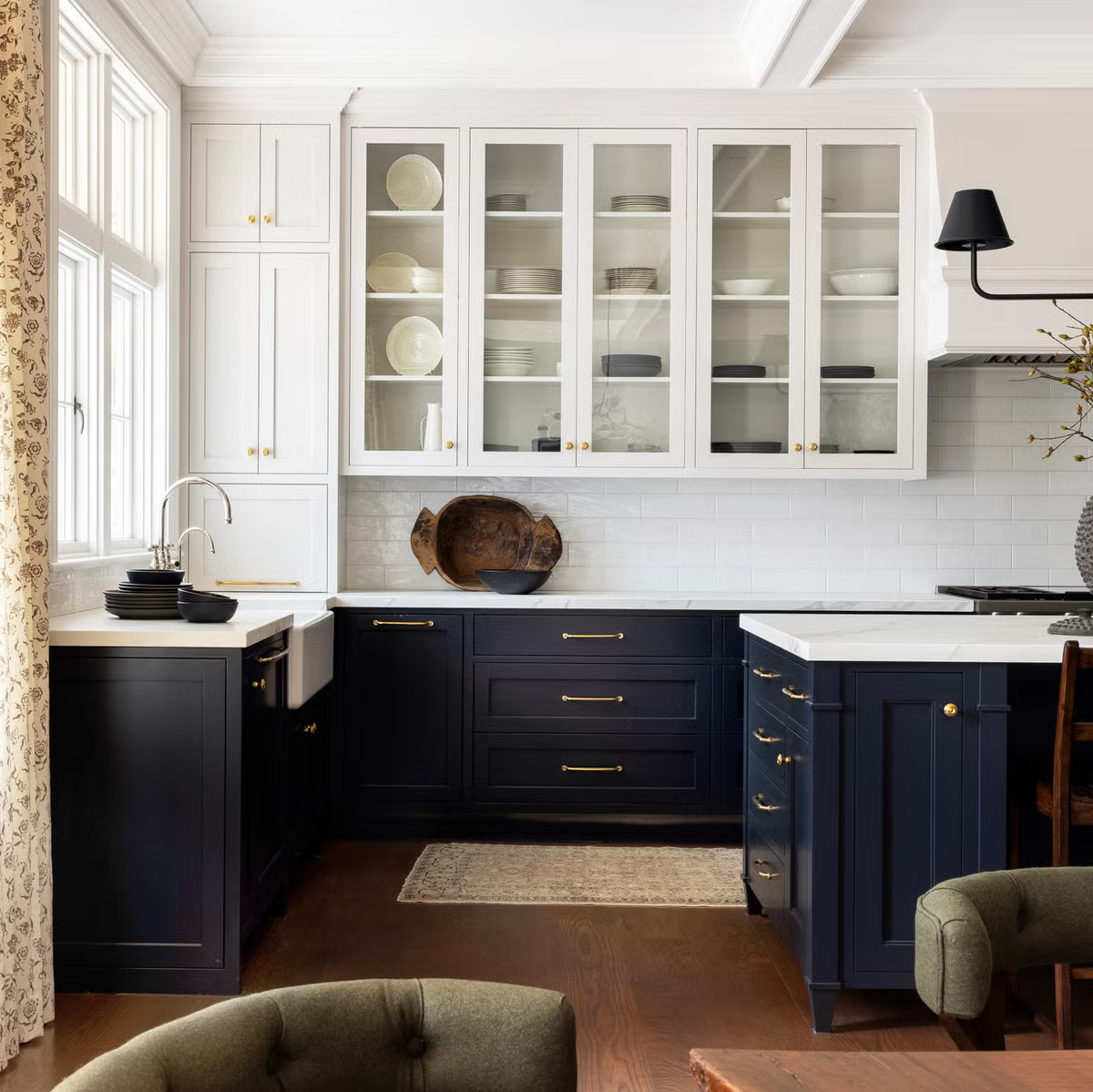
Navy Blue and Cloud White: This popular combination adds a pop of rich colour to the base cabinets or island, while white upper cabinets keep the space feeling light and airy.
Forest Green and Misty White: A nature-inspired pairing that is trending in 2025. Deep greens pair beautifully with crisp white or off-white tones, creating an elegant and inviting space.
Contrasting Kitchen Island: Keep the main perimeter cabinets in a single neutral colour (e.g., all white or grey), and paint the central kitchen island in a vibrant, contrasting shade such as crimson red, emerald green, or deep charcoal to create a focal point.
Matte and Gloss Finishes: Mix different textures within the same colour palette (e.g., matte grey with high-gloss grey) to add subtle dimension and a modern, tactile effect without using two distinct colours.
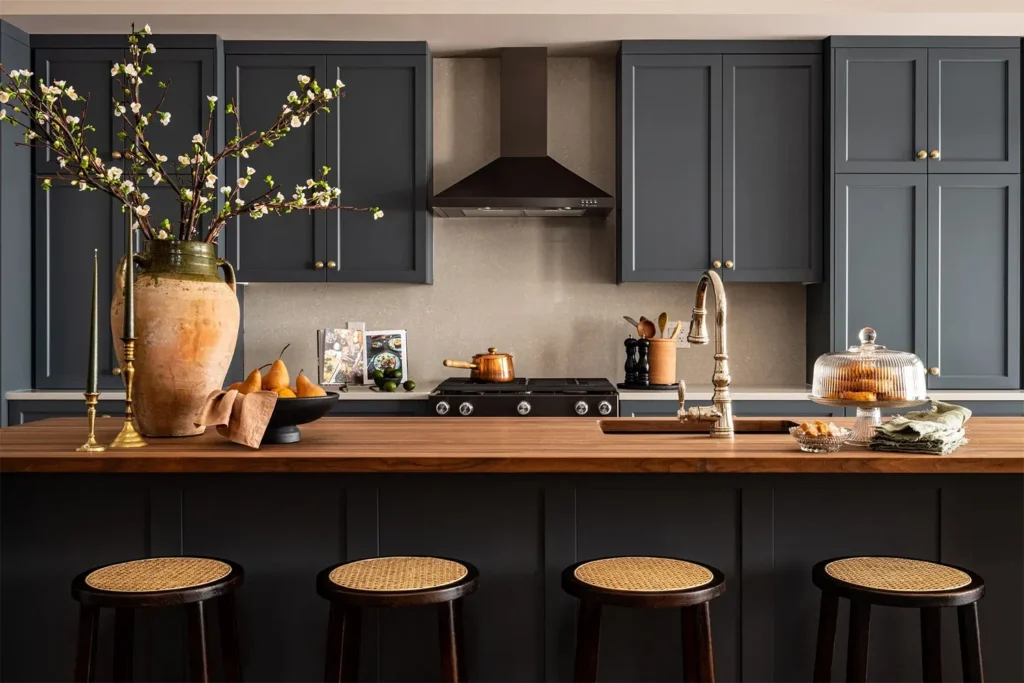
Grey and Walnut Wood: For an urban, industrial feel, pair sleek, grey-painted cabinets with warm, dark walnut accents or lower cabinets.
Colour Blocking with Tall Units: In a large kitchen, use a full-height bank of cabinets in a bold accent colour (such as plum purple or bright yellow) to define a zone, keeping the rest of the main kitchen in a neutral tone.
Light Coffee and Cream White: A subtle, tone-on-tone approach using different saturation levels of neutral shades to create a harmonious and understated design that is less intense than high-contrast pairings.
Concrete and Wood: Pair sleek materials, such as grey concrete-effect cabinets, with warm wooden elements for a contemporary industrial aesthetic that adds character and texture.
Pastels (Pink and Sage Green): For a soft, dreamy look, mix two complementary pastel shades. This combination is especially effective in smaller kitchens to add a gentle touch of colour.
Embracing a two-tone cabinetry style not only enhances your kitchen’s visual appeal but also opens up exciting possibilities for customisation, allowing you to incorporate new materials effortlessly.